Lake Forest, CA · Garage Door Service
Replacing a garage door opener in Lake Forest means matching new safety tech to houses built mostly in the 1980s and 90s, not just swapping a motor.
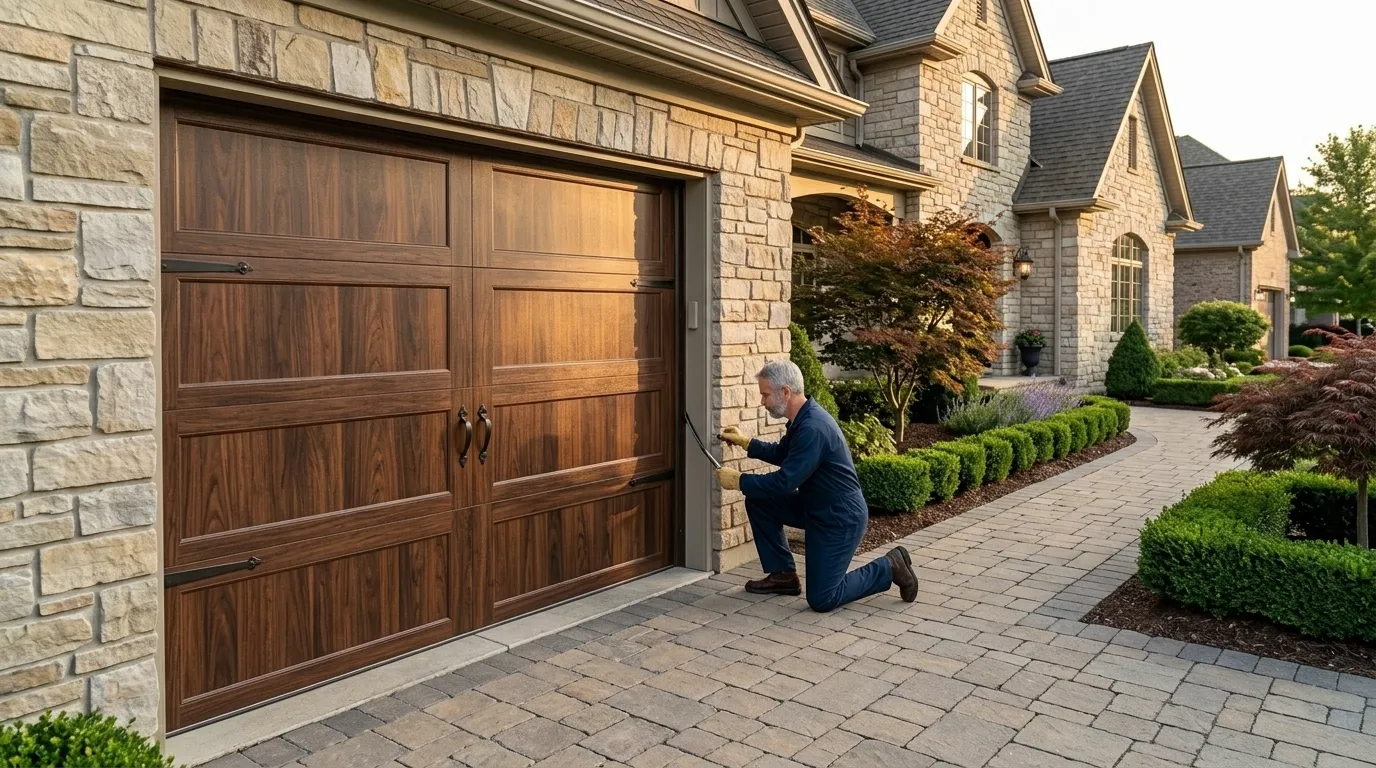
A proper opener installation isn't just bolting a new motor head to the ceiling. We pull the old unit, check the header for clearance, and match the drive type - chain, belt, or screw - to what the door and track can actually handle. Then we wire in the wall control, set the travel limits, mount the photo-eye safety sensors at the base of the track, and pair the remotes and keypad.
Most of the openers we're pulling out across the service area's 1980s and 90s tract-built garages are chain-drive units with none of the safety sensors or rolling-code security that newer models come with standard. Swapping to a belt-drive with battery backup is usually the upgrade owners ask for once they see what's involved.
We also check the spring and cable setup while we're in there. An opener has to lift against whatever tension the springs are holding, and a worn spring puts extra strain on a brand new motor from day one. If the springs are shot, we say so before we hang new hardware on old iron - no point installing a $200 opener that burns out in a year because it's fighting bad springs.
The install itself, start to finish including sensor alignment and remote programming, is a controlled job - not something rushed between other calls.
Housing in this service area was built between 1938 and 2015, with a median year of 1982, and most of the stock clusters in the 1980s and 90s builds spread across two dozen named neighborhoods. That means a large share of the openers still running today are original to houses that are now 30 to 40 years old - motors, gears, and logic boards that predate the safety sensor and rolling-code standards buyers expect now.
The local climate sits in a mild temperate band, so we don't see the freeze-thaw cracking or extreme heat-cycle stress that kills openers in harsher regions. That's actually part of the problem: without a hard weather event to force the issue, a worn nylon gear or a tired capacitor just degrades slowly, year after mild year, until it fails outright with no real warning. Owners here tend to run an opener until it stops, not until it shows obvious wear.
With a median household income of $131,314 across the service area, most owners aren't choosing between a patch job and a real upgrade for cost reasons - the delay is usually just not knowing the old unit is a safety gap, not a budget call.
The most common call is a door that won't respond to the remote at all, or responds only sometimes - usually a sign the logic board or the wall switch wiring in an older unit has finally quit, not a battery issue. Close behind that is a door that starts closing and then reverses partway, which on an original-era chain-drive opener often means there's no photo-eye sensor installed at all, so the unit is guessing at obstruction rather than reading it.
Grinding or a delayed start when you hit the button points to worn drive gears inside the motor housing - a part that just wears down over enough open-close cycles, no dramatic failure needed. Some owners notice the opener light doesn't come on anymore, or the unit hums but the door doesn't move; that's usually the drive mechanism giving out while the motor itself still runs.
A door that opens fine but won't fully close, stopping a few inches up, is almost always a sensor alignment issue rather than a motor problem - worth checking before assuming the whole unit needs replacing.
Some of this is fair game for an owner with a ladder and a Saturday morning. Wiping down and realigning the photo-eye sensors, replacing remote batteries, and checking that the wall switch has power are all safe, simple checks that solve a surprising number of "opener won't work" calls before they become calls at all.
What we don't recommend doing yourself: pulling the old motor head down, rewiring the unit, or touching anything connected to the springs and cables while the opener is disconnected. A door under spring tension with no working opener attached can move unpredictably, and that's how people get hurt. We also won't pretend every opener is worth repairing - if the logic board in a 30-year-old unit is dead, spending money chasing individual parts on something that old usually costs more than a new belt-drive install with sensors and battery backup already built in.
If you're not sure whether what you're looking at is a five-minute sensor fix or a full replacement, that's a reasonable thing to ask about before buying parts.
If the motor runs but the door won't move, or the unit is original to a house built decades ago with no photo-eye sensors, replacement usually makes more sense than chasing parts for an old logic board. If it's a sensor alignment or a dead remote battery, that's a repair, not a replacement.
In most cases yes, but header clearance and track type matter. Houses across the 1980s and 90s tract-built neighborhoods in this area often have tighter header space, which can rule out certain opener models unless a low-headroom or jackshaft kit is used.
Not the way extreme heat or freeze cycles do elsewhere. The mild temperate conditions here mean openers usually fail from age and wear rather than weather stress, which is why a unit can seem fine right up until it isn't.
Yes. We check the door and springs as part of any opener install regardless of who supplied the door, since the opener has to work with whatever hardware is already on the track.
By Neighborhood
We also handle opener installation in these Lake Forest-area suburbs.
Call now or request a free quote - same-day service on most repairs, upfront written pricing.