Lake Forest, CA · Garage Door Service
Opener installs for North Tustin's 1960s-era garages, done by a crew that drives in from Lake Forest, 10 miles out, and knows the hardware this age of house actually has.
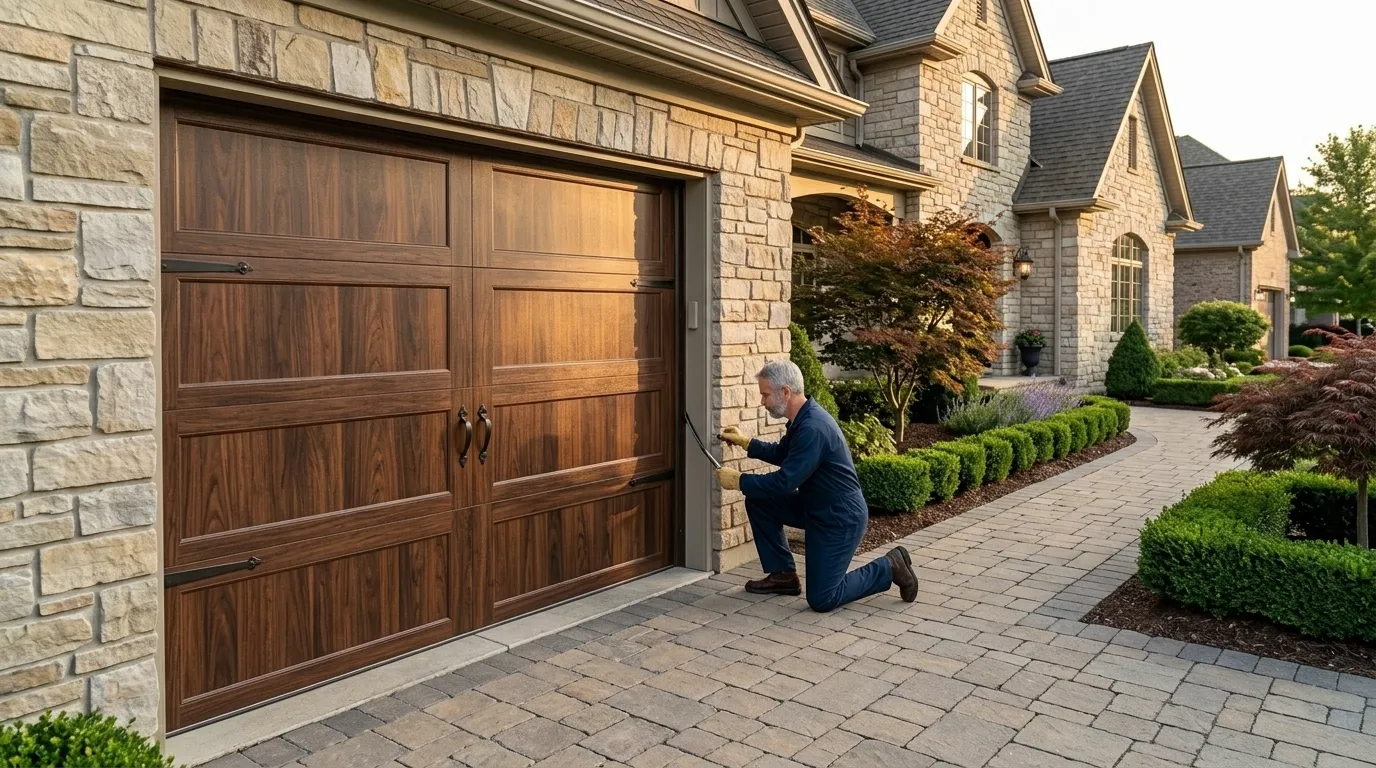
North Tustin sits about ten miles from our shop in Lake Forest, which shapes how a call here goes. We don't roll a truck on guesswork - when someone calls about an opener that's grinding, chain-slapping, or just dead, we ask enough on the phone to know what's likely waiting when we get there, because that drive is real and we'd rather bring the right parts the first time.
What's usually waiting: this pocket of North Tustin has a lot of houses built around 1965, older than the typical build across the wider service area (which runs closer to 1982). That matters for openers specifically. A house from the mid-60s was often retrofitted with a chain-drive opener decades after the original door went in, on brackets and header mounts that were never sized for today's units. The failure we see most is the mounting point itself - cracked or undersized wood framing, not the opener. You can put a brand-new opener on bad framing and it'll strip itself loose again inside a year.
The other common issue is wiring left over from an older, lower-voltage system that doesn't match what a current opener wants, or a wall control from two upgrades ago still patched into the circuit. Both are fixable, but neither shows up until someone's actually up on the ladder.
Before we touch the opener, we check the header - the wood the mounting bracket bolts into. On a lot of these 1965-vintage garages, that header has never been reinforced, so if it's soft or split, we add blocking before anything goes up. Skipping that step is how you get a callback in eight months.
From there it's a standard install: mounting the unit, running or replacing the wiring to code, setting travel limits and force settings so the door doesn't slam or stall, and pairing the safety sensors at the base of the track. We test the auto-reverse with a real object in the door's path, not just a visual check, because that's the safety feature that actually matters if a kid or a pet is in the way.
We'll also tell you straight if your existing door and track are too far gone to carry a new opener well - sometimes the opener isn't the real problem, the door is, and putting a new motor on tired hardware just moves the failure point. That's not an upsell; it's the honest read on what you're working with.
One limit worth naming: we don't stock every belt-drive model on the truck. If you want a specific brand or a smart-home-integrated unit, we may need to order it, which adds a day or two before install.
A straightforward opener swap - same mounting points, wiring already up to code - usually runs about two to three hours once we're on site. Add the header reinforcement that's common in this part of North Tustin and you're looking at closer to four, since we're framing before we mount anything.
Because the address is ten miles out from Lake Forest, we build the drive into how we schedule the day rather than treating it as an afterthought. We're not a satellite branch here - every job in North Tustin means a crew coming from Lake Forest, so we tend to batch calls in this area when we can, which sometimes affects which time slots are open on a given day.
Climate isn't a big factor in the labor itself. This is a mild temperate area, and we're not fighting frozen tracks or heat-warped panels the way a shop in a harsher climate zone would be. That's one less variable slowing the job down.
The households in this stretch of North Tustin sit at a median income noticeably higher than the wider service area average, and that shows up in what people ask for - more requests for quieter belt-drive units and smart-opener features, fewer bare-bones chain drives. But income doesn't change what's behind the wall. The 1965 median build year is the number that actually predicts the job: houses from that era were framed for lighter, simpler openers than what's sold today, and the gap between what the framing expects and what a modern unit weighs and torques on install is where most failures start.
With roughly 8,926 households in this immediate area, we're not talking about a handful of outlier homes - this header-and-wiring pattern is common enough that it's close to the default condition here, not the exception. A page written for a newer-build suburb would tell a different story. This one is about a specific age of house and what it takes to put a modern opener on it safely.
No. We work out of Lake Forest and drive to North Tustin for every job - it's about a ten-mile trip. We don't keep a separate branch or depot here, so scheduling accounts for that drive rather than pretending it isn't there.
On a lot of North Tustin homes built around 1965, the header framing was sized for older, lighter openers. A modern unit puts more torque on that mount, and without reinforcement it works loose over time. We check and, if needed, reinforce the header before mounting anything new.
Not much. This is a mild temperate climate zone, so we're not dealing with the freeze-thaw or extreme heat swings that stress openers and tracks in harsher climates elsewhere. Wear here tends to come from age and mounting condition, not weather.
Call now or request a free quote - same-day service on most repairs, upfront written pricing.