Lake Forest, CA · Garage Door Service
Garage door maintenance for Lake Forest homes built 1938-2015, covering the mild-climate wear patterns that shorten spring and roller life across the service area.
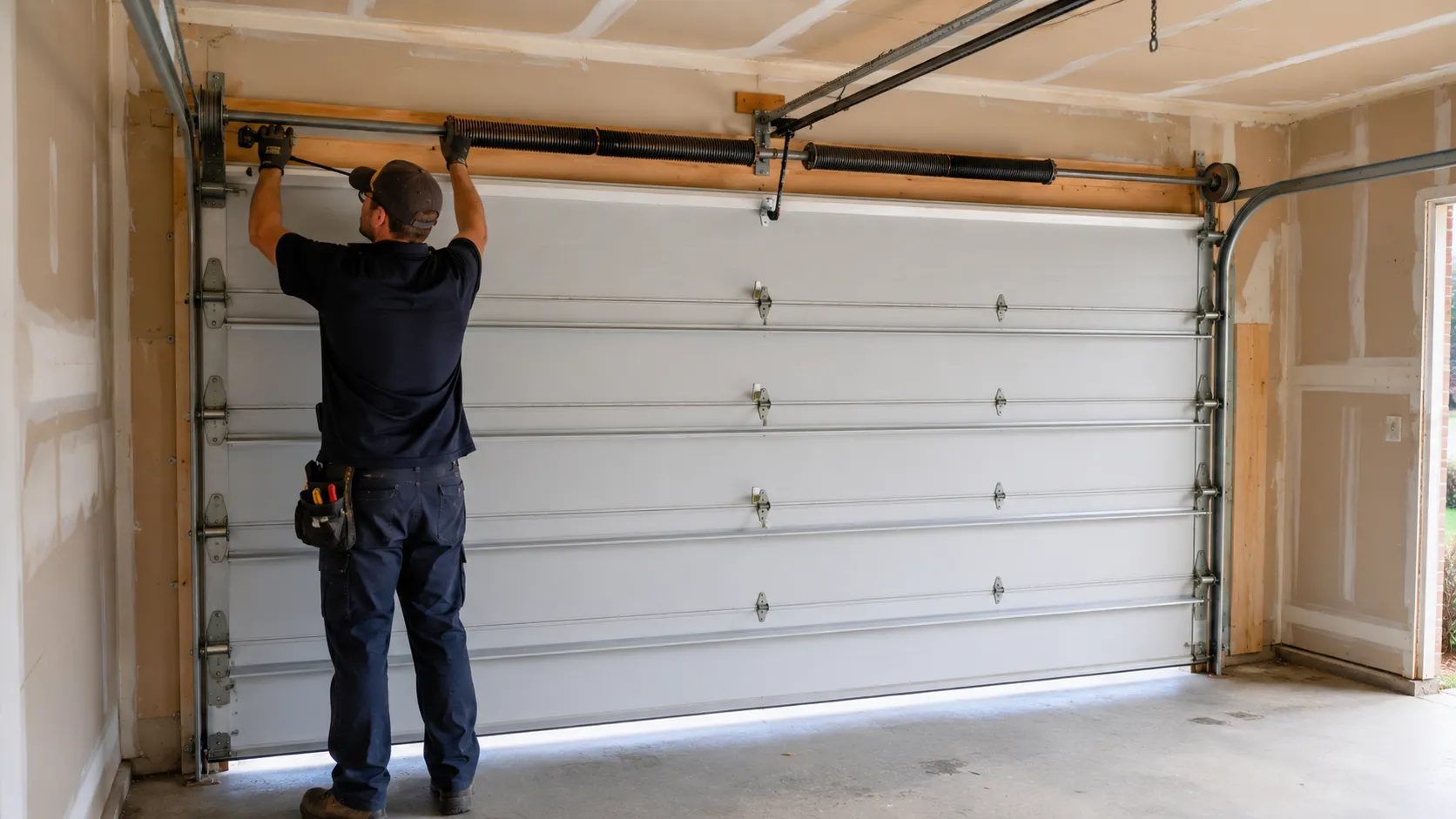
A real maintenance visit isn't a spray can and a signature. We check torsion spring tension, inspect cable wear at the drum, test the opener's force settings, lubricate rollers and hinges, and check the track for alignment drift. On doors installed before the mid-1990s we also check for degraded end bearings, since that hardware wasn't built to the tolerances newer doors ship with.
We pull the panel bolts and check for surface rust where moisture has sat, even in a dry climate, because condensation inside a closed garage does more damage than rain ever does. We check the bottom seal, since a gap there lets in dust and pests, both common in areas backing up to open hillside.
What we don't do on a maintenance call: full spring replacement, opener swaps, or panel repair. If we find something that needs parts beyond wear items, we'll quote it separately rather than pad the maintenance visit. A maintenance call is meant to catch problems early and keep the door running the way it was built to, not to fix what's already broken.
Housing across the service area was built mostly between 1938 and 2015, with a median year of 1982 and the bulk of it going up in the 1980s and 90s across the 24 named neighborhoods here. That means a huge share of doors, tracks, and openers are original or first-replacement equipment running on hardware specs from three decades ago.
The mild temperate climate here is actually part of the problem, not the solution. Without hard freezes or heavy storms to force early replacement, homeowners run doors well past the point where a system in a harsher climate would already be gone. Springs stretch and lose tension gradually rather than failing outright, and openers keep limping along on worn gears because nothing forces the issue. The result is a lot of doors that look fine and sound fine until the day a cable snaps or a spring lets go without warning.
Maintenance in this kind of climate is less about weatherproofing and more about catching slow fatigue before it becomes a sudden failure, which is exactly what age-appropriate torsion spring and cable inspection is built to do.
On 1980s and 90s-era doors, the first sign is usually noise: a grinding or popping sound from the spring assembly as coils lose even tension, or a rattle from rollers that have worn past their bearing surface. You'll notice the door hesitate partway through its cycle, or the opener strain and reverse before it fully closes.
On original hardware from the 1938-1982 end of the range, we more often see bent track from years of minor misalignment nobody noticed, plus cables fraying where they wrap the drum. Since none of this shows up as a dramatic breakdown right away, most owners describe it as the door just "feeling off" for a few weeks before something finally gives.
A door that suddenly feels heavier to lift by hand, even with the opener disconnected, is one of the more reliable early signs of a spring losing tension gradually rather than snapping outright.
Some of this is fair to do yourself: wipe down and lubricate rollers and hinges with a garage-door-specific lubricant every few months, check that the bottom seal isn't cracked or gapped, and visually check cables for fraying without touching them under tension. Keep the track clear of dust and debris, which builds up faster near open hillside lots than in fully paved neighborhoods.
What you should not do yourself: adjust torsion spring tension, remove the spring cone bolts, or work on anything holding the door up under load. A torsion spring under tension can cause serious injury, and it's not a place to learn by trial and error. Opener force-limit adjustments are also easy to get wrong in a way that either strains the motor or lets the door close on something it shouldn't.
If your door is original to a home built before the 1980s, a professional inspection is worth more than DIY lubrication alone, since hardware from that era often needs parts nobody stocks anymore.
With the mild climate here, doors don't get forced into obvious failure the way they would somewhere with hard freezes, so once-a-year maintenance is a reasonable baseline for most owners, closer to every six months if your door is original to a home built before the 1990s.
It depends on the hardware, not just the age. A lot of doors from the 1980s and 90s stock across this area are still solid mechanically and just need spring, roller, and cable attention rather than replacement. We'll tell you honestly if a repair isn't worth it during the visit.
No. A maintenance visit checks tension, wear, and alignment, but full spring replacement is a separate job with its own parts and labor. If we find a spring near the end of its life during your visit, we'll quote that work separately.
That's usually a torsion spring gradually losing tension rather than failing all at once, which is common on older doors in a mild climate where nothing forces an early, obvious failure. It's worth having checked before the spring lets go without warning.
By Neighborhood
We also handle maintenance in these Lake Forest-area suburbs.
Call now or request a free quote - same-day service on most repairs, upfront written pricing.