Lake Forest, CA · Garage Door Service
Broken or frayed garage door cables in Lake Forest, CA? Learn why 1980s-90s tract homes fail this way and what a proper cable repair job actually involves.
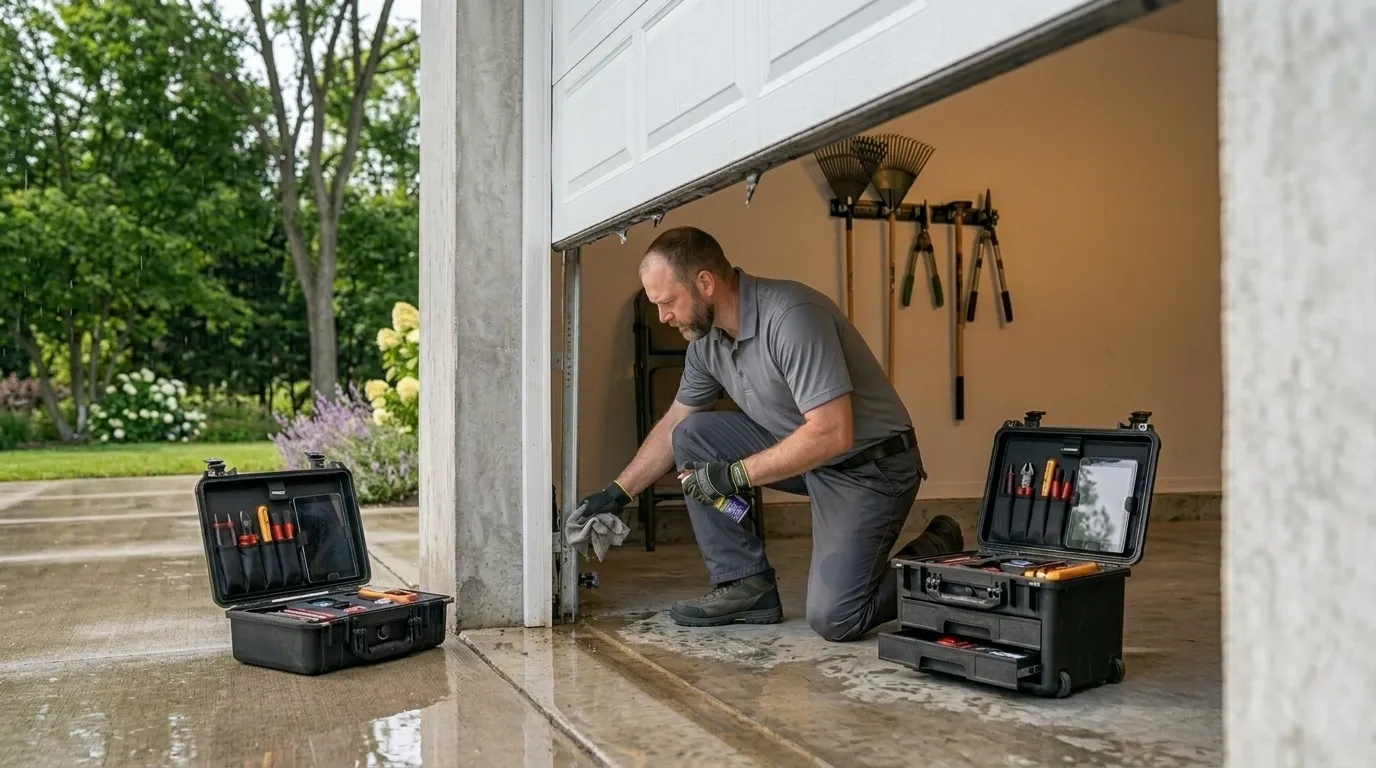
A cable repair job is never just the strand you can see hanging loose. When one lift cable snaps, the other one is almost always close behind it, because they were installed the same day and have carried the same weight through the same number of open-close cycles. A proper job replaces both cables, not the one that failed, then checks the drum for grooving where the old cable dug in, checks the bottom brackets for wear, and re-balances the door against the spring before it ever goes back on the opener.
Skipping any of that step is how a homeowner ends up back on the phone in four months with the second cable gone, or worse, a door that's now pulling crooked and chewing up the track on one side. The cable itself is a cheap part. The labor is in doing the inspection around it properly - checking that the drum, the spring, and the track are all still square before you trust the door to a new cable.
We don't quote a cable swap without looking at what put the strain on the old one in the first place. If the spring is undersized or the track is bent, a new cable on its own just buys you a few more months.
Housing across this part of the service area went up mostly between the 1980s and the 1990s, inside a broader build range of 1938 to 2015, with a median build year around 1982. That means a large share of the original garage doors - and their original lift cables - are now 30 to 40 years past installation, well beyond the cycle count a galvanized cable is rated for, even if it looks intact from the driveway.
The climate here is mild temperate, which actually works against early warning. In a place with hard freeze-thaw cycles or heavy coastal salt air, a fraying cable rusts visibly and gets noticed. Here, the wire strands just fatigue quietly from use - thousands of door cycles over decades - with no rust bloom to flag it. The cable looks fine until one strand goes, then the rest go fast under load.
Across the 24 named tract areas that make up most of this stock, the pattern repeats: same builder-grade cable spec, same install era, same slow fatigue with no visible corrosion to warn you first.
The most common sign is a door that starts dropping unevenly - one side reaches the floor a beat before the other, or the door racks slightly sideways in the track as it closes. Look at the bottom corner brackets: frayed strands sticking out like a broken guitar string are the clearest tell, and once you see that, the cable is close to done, not just worn.
A loud pop or bang while the door is moving, followed by the door stopping dead or dropping fast, usually means the cable has already let go. If that happens, don't run the opener again - a door hanging on one cable can jump the track or come down hard.
On older openers without a working safety sensor, a snapped cable is more dangerous, since the door has less to stop a fast drop. If your door is groaning or scraping on one side before it fails outright, that's the fatigue talking, and it's worth a look before it snaps rather than after.
We'll be straight about this one: lift cables are under spring tension, and that tension is what makes a DIY cable swap a bad idea for most owners. The spring, not the cable, is storing the force that can snap a bar or a hand if you don't know how to release it safely first. This isn't a job we'd tell you to save on.
What you can safely do yourself is the inspection. Pull the door down by hand with the opener disconnected, and look at both cables at the bottom brackets for fraying, rust, or thinning strands. Check that the door tracks straight and doesn't bind on one side. If you see fraying, that's your cue to get it looked at before it becomes a snapped cable and a stuck door.
We won't try to sell you a full door replacement when a cable and a spring check will do the job - but if the drum is grooved out or the track is bent from years of a door running unbalanced, replacing just the cable is a short-term patch, and we'll tell you that up front instead of letting you find out in a few months.
No. With one cable gone, the door is hanging unevenly on the other side, and forcing the opener can pull it off the track or drop it hard on whoever is underneath. Leave the door where it is, disconnect the opener if you can do it safely from inside, and get the cable looked at before anyone tries to move the door again.
Most cables here fail from age and cycle count, not sudden damage. In this mild climate there's little rust to warn you ahead of time, so a cable installed with the original 1980s or 90s door can look fine right up until one strand gives out and the rest follow under load.
Both. They're installed at the same time and carry the same cycles, so if one has fatigued to the point of snapping, the other is close behind it. Replacing only the failed side means a second service call in a matter of months, once the untouched cable reaches the same age-related wear.
No, and it's worth knowing the difference before you call. A spring failure usually means the door won't lift at all or feels far heavier than normal. A cable failure means the door drops unevenly or one side hangs low. Both involve stored tension and both are safer left to a repair call than a home fix.
By Neighborhood
We also handle cable repair in these Lake Forest-area suburbs.
Call now or request a free quote - same-day service on most repairs, upfront written pricing.