Lake Forest, CA · Garage Door Service
Serving Rancho Santa Margarita from 5 miles away in Lake Forest. Maintenance built for the early-90s doors and hardware common on this side of the hill.
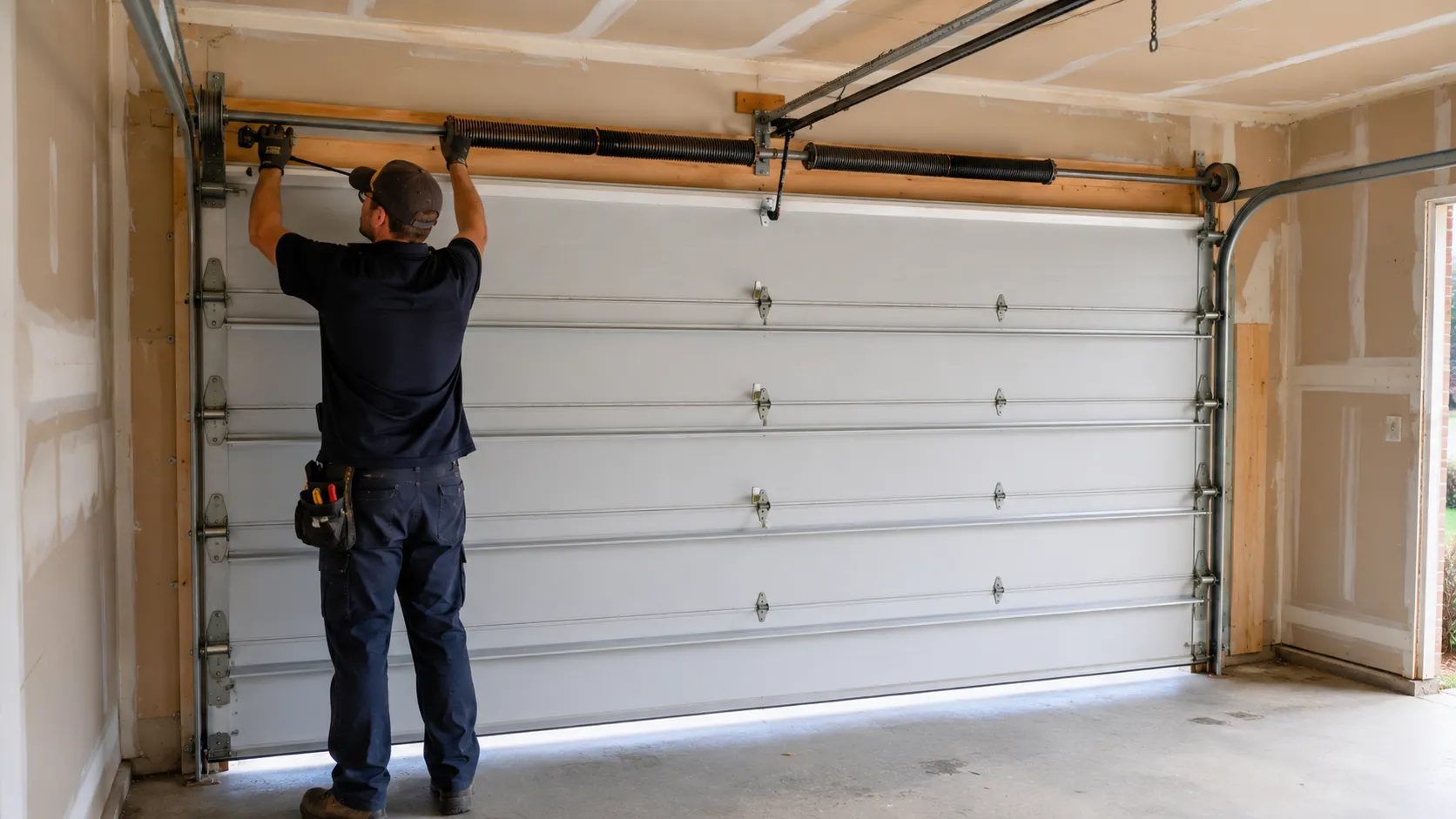
We're five miles out of Lake Forest to get here, which is close enough that a maintenance call doesn't turn into a half-day event, but far enough that we plan the visit rather than swing by on a whim. That matters because most of Rancho Santa Margarita went up around 1992, and doors from that era are hitting the point where the factory grease has gone gummy, the rollers are worn oval instead of round, and the spring is nearing the end of its cycle count even if it hasn't snapped yet.
The common failures we see on doors this age: torsion springs that have lost enough tension that the opener is doing work it wasn't built for, hinges with elongated screw holes from years of vibration, and track brackets that have backed off the wall a fraction of an inch at a time. None of it looks urgent from the driveway. All of it gets more expensive the longer it sits.
A door that used to close in one smooth motion starts pausing partway, or reverses for no clear reason. You'll hear a grinding or popping sound near the top of the travel that wasn't there a year ago. The opener light blinks and the manual says to check the sensors, but the sensors are fine - it's usually slack in the cable or a spring that's no longer doing its share of the lift.
Some owners notice it first as a change in effort: the door feels heavier when the power's out and you have to lift it by hand. That's the spring talking, not the opener.
With a median build year of 1992, Rancho Santa Margarita's doors are old enough that a lot of the original hardware is still in place but past its rated life, and new enough that homeowners assume everything's still under some kind of warranty. It isn't. Thirty-plus years on the same springs and rollers is a long run for parts rated in cycles, not years.
The area's mild climate keeps rust and cold-snap failures off the list - this isn't a place where doors freeze shut or hardware corrodes fast. What we see instead is straightforward wear: springs fatigued from years of daily cycling, and rollers and hinges loosened by the same. It's a maintenance problem, not a weather problem, which is actually the easier one to stay ahead of.
You can do some of this yourself. Wipe down the tracks, check that the photo-eye sensors are aligned and clean, and look at the springs for visible gaps or rust streaks - but do not touch a torsion spring yourself. They're under enough tension to cause real injury, and that's not a task for a Saturday afternoon.
A reasonable owner check: once a season, lift the door manually with the opener disconnected and see how it feels. If it drops or feels heavy, the spring balance is off and it's a call, not a DIY fix. Lubricating rollers and hinges with the right lubricant (not WD-40, which washes grease out rather than replacing it) is a fine job to do yourself between visits.
We come out from Lake Forest, about five miles away, so a maintenance visit here is a scheduled trip rather than a stop we happen to be making anyway - we plan it the same as any other service call in the area. Tell us the age of the door if you know it and roughly when it last had any service, if ever, and we'll bring what a door from the early 90s typically needs.
We don't have a published price list for this page, so we won't guess at a number here - what a visit costs depends on what the door needs once we're looking at it, and we'd rather tell you straight than post a figure that doesn't hold up. What we can say: catching a fatigued spring or worn roller during a maintenance visit is consistently cheaper than the after-hours call once it fails.
About five miles. We treat it as a standard scheduled service area, not a same-day drop-in, so we ask for a bit of lead time to book the visit rather than promising to be there within the hour.
No. Most doors from that era can still be serviced rather than replaced, as long as the track and frame are in decent shape. The springs and rollers usually need attention by now, but that's routine maintenance work, not a full teardown.
The opener working doesn't mean the spring and hardware are fine - the motor can mask a failing spring for a while before it gives out. A maintenance visit checks the balance and hardware separately from whether the opener still runs.
Not especially. It's a mild area without the freeze-thaw or heavy corrosion issues that wear down hardware elsewhere. What ages doors here is simple use over three-plus decades, not weather.
Call now or request a free quote - same-day service on most repairs, upfront written pricing.