Lake Forest, CA · Garage Door Service
Garage door maintenance for Temescal Valley's 2000s-built homes, serviced from Lake Forest. Steel doors, torsion springs, and opener tune-ups done right.
Temescal Valley is a small pocket of the service area - about 9,013 households, a fraction of the volume we see closer to Lake Forest. That matters for maintenance because it means we're not running a high-turnover route through here; when we come out, it's usually one job, done thoroughly, rather than three quick stops back to back.
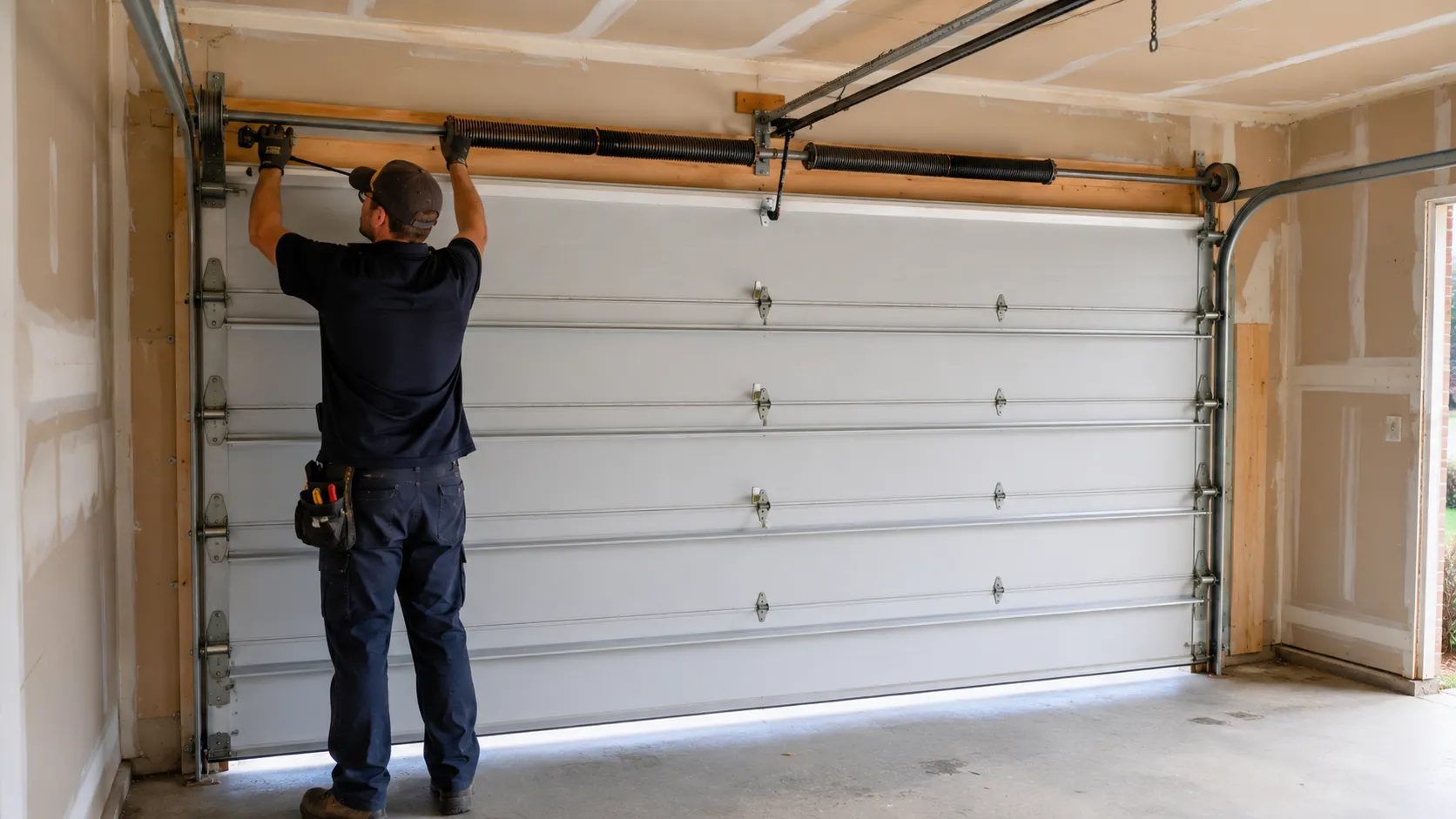
Most houses in Temescal Valley went up around 2003, decades newer than the 1982 median across the wider service area. That changes what a maintenance visit actually covers. We're not scraping old grease off side-mounted torsion tubes or hunting for a spring size nobody stocks anymore. We're checking steel roll-up doors on standard galvanized torsion springs, verifying the opener's photoeye sensors are aligned (required by federal rule since 1993, so nearly every door here was built with them), and lubricating hinges, rollers, and the torsion bar itself. It's a tune-up, not an archaeology dig.
Doors this age don't usually fail catastrophically - they drift out of adjustment instead. The most common calls from Temescal Valley are worn nylon rollers that have gone loud, opener drive gears wearing thin after years of daily cycles, and travel limits that need resetting because the door doesn't close all the way or reverses for no clear reason.
The mild temperate climate here doesn't put the stress on hardware that freeze-thaw regions see, so springs generally last their full cycle count rather than failing early from cold-weather metal fatigue. What we do see is dust and dry heat drying out lubricant faster than owners expect, which speeds up roller and hinge wear if the door hasn't been serviced in a while. Weatherstripping at the bottom panel also cracks and lets in dust over time, which is a five-minute fix if caught early and an all-day dust problem in the garage if it isn't.
We don't have a published maintenance price specific to Temescal Valley, and we're not going to guess at one here. What we can tell you is that median household income in Temescal Valley sits at $119,647, somewhat below the $131,314 median across the broader service area - which is worth mentioning because it's part of why we'd rather quote a maintenance visit directly than post a number that doesn't reflect your door, your opener brand, or how much lubrication and adjustment it actually needs.
One honest limitation: if your opener is old enough to predate the photoeye requirement, or if a spring has already snapped, that's not a maintenance visit anymore - that's a repair, and it gets quoted separately once we've seen the door.
For a town where most doors are steel roll-up units on standard-width torsion springs, we carry the parts that actually wear out on that hardware: nylon and steel rollers, hinges, torsion bar bearing plates, cable, and photoeye sensor units. We stock lubricant rated for torsion springs and track, not general-purpose grease that attracts dust.
We do not carry parts for wood panel doors on side-mount hardware, since that's not what's common in a neighborhood built mostly after 2000. If you've got an older door that's the exception rather than the rule out here, tell us before we roll the truck 14 miles from Lake Forest so we bring the right part the first time.
A standard maintenance visit on a steel torsion-spring door - lubrication, hardware check, opener sensor alignment, travel limit adjustment - usually runs under an hour once the truck is on-site. Add a roller or hinge swap and you're looking at maybe twenty extra minutes. We don't stage a crew here permanently; the visit is scheduled out of Lake Forest, roughly 14 miles away, so plan around drive time when you book rather than expecting a same-hour walk-in.
Plenty of this is reasonable for an owner to handle. Wiping down and lubricating rollers, hinges, and the torsion bar with the right spray lubricant takes ten minutes and is worth doing twice a year. Checking that the photoeye sensors are clean and aligned - no cobwebs, no dust film - is just as easy and catches a surprising number of "my door won't close" calls before they happen.
What we don't recommend touching yourself: the torsion spring itself, under any circumstance. Even on a newer door with modern hardware, that spring is wound under enough tension to cause serious injury if it lets go while you're working on it. If a spring looks stretched, rusted at the coils, or the door feels heavier than it used to when you lift it manually, that's a call, not a weekend project.
Once a year is reasonable for a door built around the early 2000s that isn't showing problems. If you hear grinding rollers or the opener strains more than it used to, don't wait for the annual visit - that's usually a sign lubrication alone won't fix it.
Mostly no. Doors built after 1993 were required to ship with photoeye reversing sensors, and since most Temescal Valley homes date to around 2003, that hardware is already standard. Maintenance here is about keeping it aligned and lubricated, not retrofitting older safety gear.
No - Temescal Valley is serviced from our Lake Forest location, about 14 miles away. We schedule visits out to this area rather than running a separate crew based here.
Because the right price depends on your door and opener, not just the town. We'd rather quote it after seeing the hardware than post a number that turns out wrong once we're on-site.
Call now or request a free quote - same-day service on most repairs, upfront written pricing.