Lake Forest, CA · Garage Door Service
Garage door service for Lake Forest homes built mostly in the 1980s and 90s - spring swaps, opener tune-ups, and track fixes suited to this area's housing stock and mild climate.
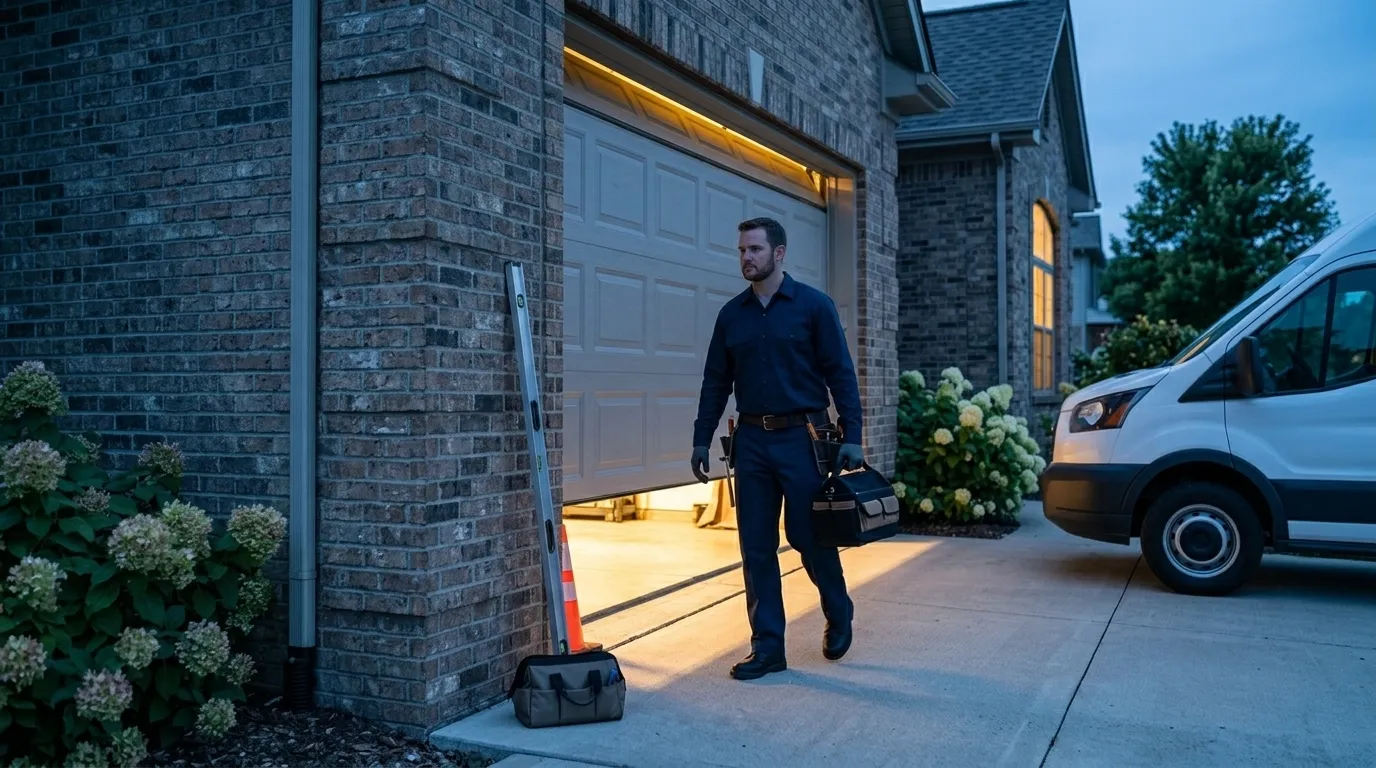
Most service calls in Lake Forest come down to the same handful of parts: torsion or extension springs, the rollers riding the track, the cable drums, and whatever opener is bolted to the ceiling joist above the door. A proper service call means checking spring tension against the door's actual weight, not a guess, then pulling the rollers to see how worn the nylon or steel actually is. On a lot of these houses the track alignment has drifted a little over the decades - not enough to notice day to day, but enough that the door binds or the opener strains on every cycle. We check the bottom brackets and the cable condition too, since a fraying cable next to a loaded spring is the combination that actually hurts someone. If the opener is original to the house, we test the force settings rather than just replacing the remote battery and calling it done. None of this is exotic work. It's the same handful of checks every time, done in the order that catches the part about to fail before it fails on someone's hand.
Lake Forest's housing runs from 1938 up through 2015, but the median sits around 1982, and most of the tract construction across the area's named neighborhoods dates to the 1980s and 90s. That matters because a huge share of doors and openers in this area are original or one replacement cycle in - meaning the springs, drums, and hinges are all wearing out around the same age, on the same schedule, across whole streets at once. Newer pockets like Foothill Ranch and Portola Springs have younger openers, but they're still running the same off-the-shelf torsion spring hardware, so the failure mode doesn't change, just the timeline. The mild, dry temperate climate here doesn't rot wood jambs or rust steel tracks the way a humid region would. What it does instead is bake the grease out of springs and rollers and dry out nylon parts until they crack, quietly, with no water damage to tip you off. So the local failure isn't corrosion - it's UV and heat cycling wearing lubricated parts down faster than owners expect.
The first sign is usually noise: a grinding or popping sound on the way up, coming from a spring that's lost lubrication rather than one that's rusted. Next is a door that feels heavier by hand than it used to - that's a spring losing tension gradually, not all at once, so most owners adjust without noticing until the opener starts straining and the gears wear early. On original 1980s-90s installs, you'll often see one side of the door hang slightly lower at rest, which points to uneven spring wear rather than a track problem. Rollers that have dried out will chatter in the track and leave a fine white dust of worn nylon on the floor near the tracks - not rust flakes, since this climate doesn't produce much of that. If the opener is the original chain-drive unit, a burning-plastic smell under load usually means the gear kit is going, which is common on units that have run for decades without a lubrication service. None of these show up overnight. They build for months before the door actually fails to open.
Some of this is fine to check yourself. Look at the rollers for cracking, listen for grinding, and see if the door feels heavier than it should when you lift it by hand with the opener disconnected. Lubricating hinges and rollers with the right garage door lubricant, not household oil, is a reasonable DIY job and it's the single thing that slows the dry-out failure common in this climate. What we don't recommend doing yourself is anything involving the torsion spring itself - the tension stored in that spring on a standard double door can break bones, and there's no safe way to learn that job by watching a video. If your door is original to a 1980s or 90s build and you're not sure how old the spring is, that's a case for a service call rather than a guess. We'll also say plainly: if the opener's gear kit is stripped and the unit is decades old, replacing the opener usually costs less over time than repeatedly repairing one that's past its design life.
The mild temperate climate here dries out spring lubricant and nylon rollers faster than owners expect, since there's no humidity to keep grease workable. That shows up as grinding or popping noise that gets worse in the hottest stretches and quiets down when temperatures drop, even though nothing has actually broken yet.
It depends on what's failing. A worn gear kit on a chain-drive unit from that era is a reasonable repair if the motor and logic board are still sound. If the unit is straining on every cycle and the housing shows heat-cracked plastic, replacement usually costs less over the life of the door than repeated gear kit repairs.
Disconnect the opener and lift the door by hand. If it feels heavy, drops on its own, or won't stay halfway up, that's a spring losing tension, not the opener. If the door moves fine by hand but the opener struggles or reverses, the problem is in the opener, not the spring.
Call now or request a free quote - same-day service on most repairs, upfront written pricing.