Lake Forest, CA · Garage Door Service
Local garage door repair for Irvine Research Center, 4 miles WSW of Lake Forest, matched to the 1980s-90s door hardware common in this pocket of homes.
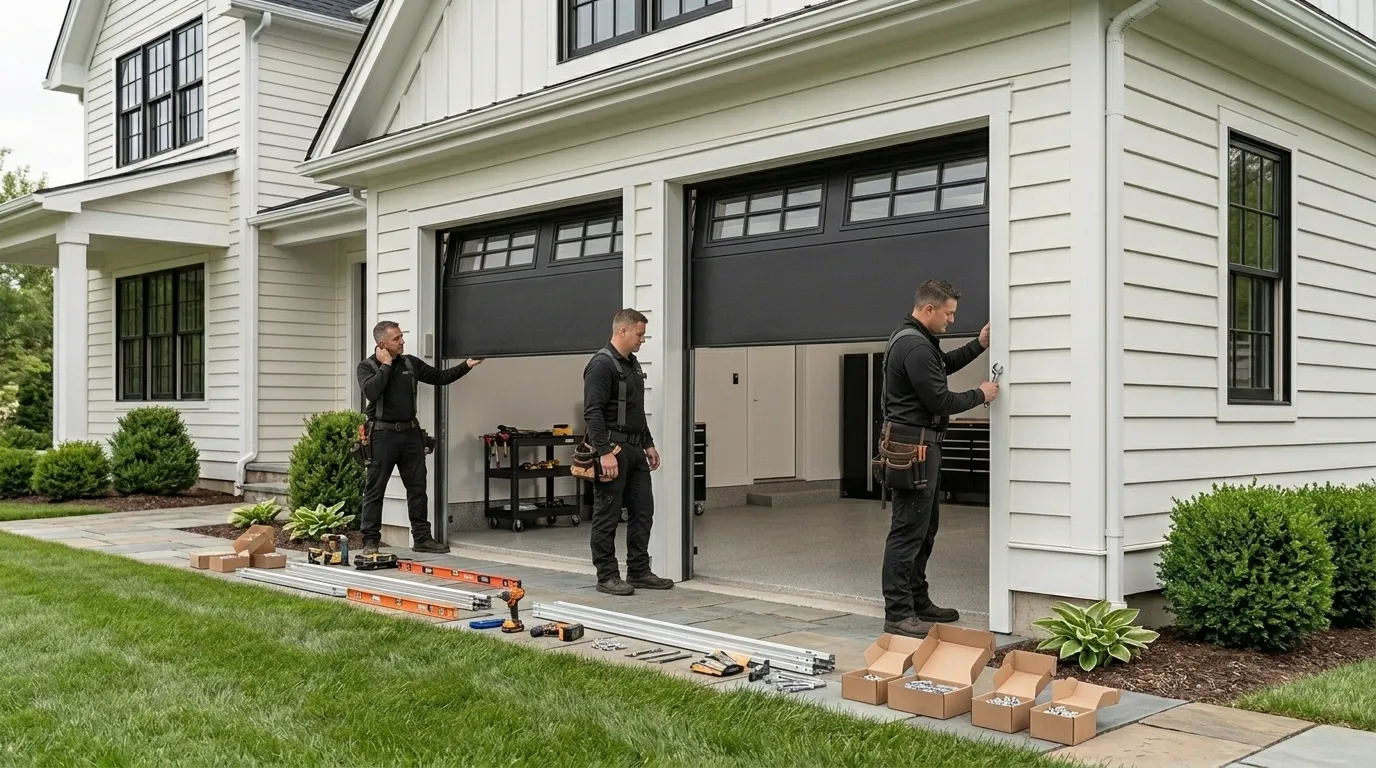
Irvine Research Center sits about 4 miles WSW of central Lake Forest, in a stretch built up during the same wave of construction that put up most of this end of the county in the 1980s and 90s. That means the calls we get from here run pretty consistent: torsion springs that have finally given out after three decades of cycling, nylon rollers that have gone hard and loud, and openers from the original build that are on their second or third remote by now. We're not guessing at what's behind the door on these streets - a house from this era almost always has a steel raised-panel door on a torsion spring system, sized for a standard two-car opening. That consistency lets us carry the right spring wire sizes and drum sets on the truck instead of ordering after we've already opened the door up. One honest note: if your home here was one of the newer builds mixed into this stretch, the hardware could be a later style, and we'll confirm on-site before quoting anything rather than assume the neighborhood average applies to your door.
This is a small, specific pocket - not a whole town - so we keep the page to what actually differs here: the age of the housing stock and what that does to the doors on it. We don't have street names or landmark cross-streets for Irvine Research Center to hand you, and we're not going to invent any just to make the page sound more local. What we can tell you is the era, the typical hardware, and the mild coastal-adjacent climate this part of Lake Forest sits in, which keeps rust and cold-weather spring failure less of an issue here than it is in harsher climates. If a spring breaks on a mild March morning here, it's cycle fatigue doing its job, not a cold snap.
Housing across this part of Lake Forest was built between 1938 and 2015, with the median year sitting around 1982, and Irvine Research Center falls inside the belt of neighborhoods where 1980s and 90s construction dominates. Practically, that means original torsion springs are well past their rated cycle life on most doors that haven't already been serviced, and many openers are old enough that the drive gear or logic board - not the motor - is what's actually failing. Doors from this build era were also sized to standard openings, which keeps most panel and track replacements straightforward rather than a custom order. We won't tell you a door needs full replacement when a spring and roller set will get it back to quiet and level; that's a repair, not a sales pitch. But if a door from this vintage has a bent track from a backed-into panel or a cracked bottom section, replacement is usually the more honest number once you add up parts.
Most homes in this part of Lake Forest were built in the 1980s and 90s, with the wider area's housing stock ranging from 1938 to 2015. A door from that main build window is old enough that its original torsion spring has likely reached or passed its rated cycle count.
This part of Lake Forest sits in a mild temperate band, so we don't see the cold-snap spring snaps or ice-jammed tracks that colder climates get. Failures here are almost always cycle fatigue on original hardware, not weather damage.
We don't have street-level detail for this pocket to list here, and we're not going to guess at landmarks. What we do know is the housing era and the typical hardware it carries, which is what actually determines the repair.
Call now or request a free quote - same-day service on most repairs, upfront written pricing.