Lake Forest, CA · Garage Door Service
New garage door installation for Lake Forest homes built between 1938 and 2015, matched to the track and opener hardware your house actually has.
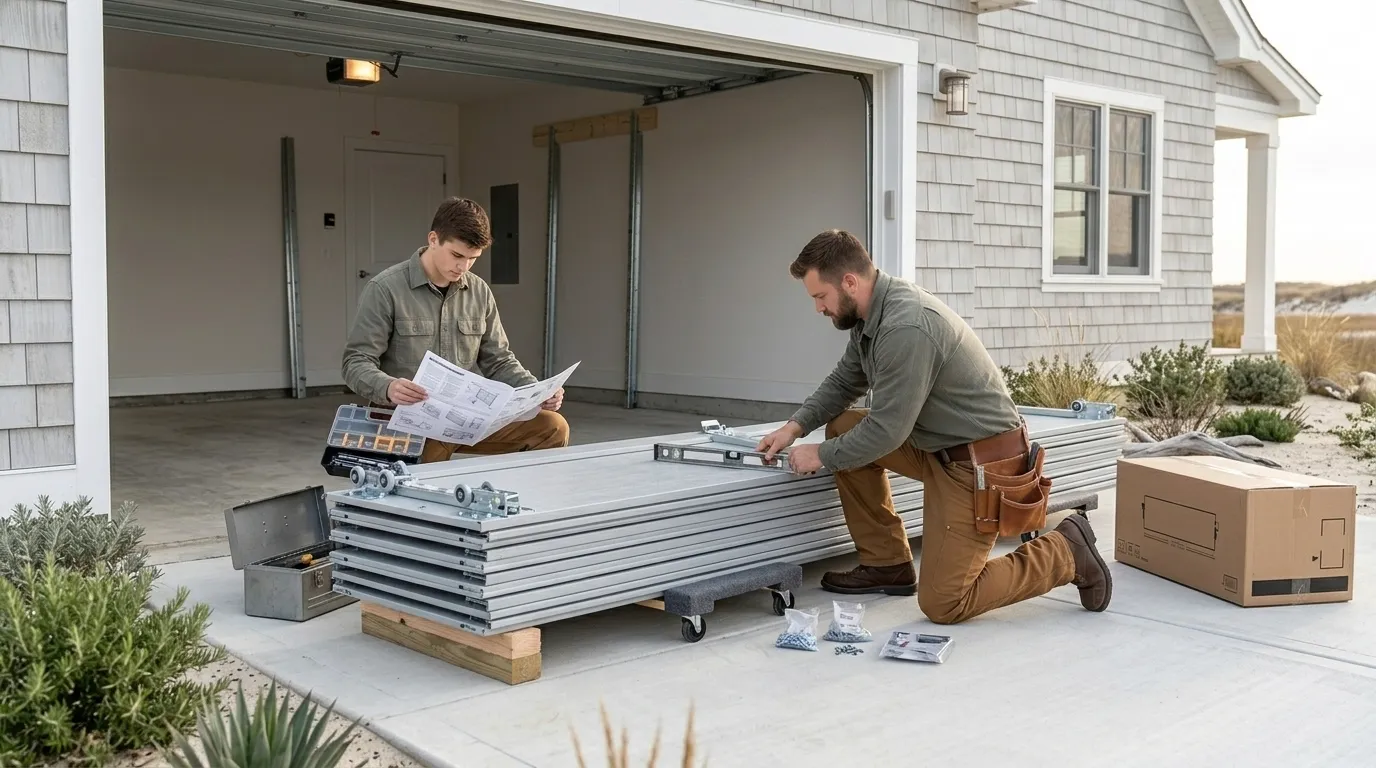
A proper installation isn't just bolting a new door onto old track. In Lake Forest, most houses were built between 1938 and 2015, with the bulk of the stock going up in the 1980s and 90s across the neighborhoods and named areas that make up this side of the county. That range matters because a house built in 1985 has a different header height, different track clearance, and often a different opener mount than one built in 2005 or later. We start by measuring the actual opening and checking what the framing will support, not by assuming a standard size fits. Then we size the door, the springs, and the track to that opening - torsion springs rated for the door's actual weight, rollers that match the track radius, and an opener bracket that's actually secured to structural framing instead of drywall. If the existing header or jamb has settled or was never square to begin with, which happens on older stock in this area, we shim and square it before the new door goes in. A door installed level and square runs quieter and lasts longer than one forced into an opening that isn't true.
Lake Forest sits in a mild temperate climate band, which sounds like an easy environment for a garage door - no hard freezes, no heavy snow load. That's mostly true, but it cuts the other way too: builders in this area, especially through the 1980s-90s wave of construction, didn't spec doors or hardware for temperature extremes because they didn't need to. What that means now is a lot of original or early-replacement doors running on lighter-duty springs and thinner panel steel than you'd see in a harsher climate. Mild weather doesn't stress a door the way freeze-thaw cycles do, but decades of daily sun exposure on south- and west-facing garages still warps panels and dries out seals, and nobody replaced the springs proactively because there was never a weather event that forced the issue. So installations here tend to happen reactively - after a spring finally lets go or a panel finally cracks - rather than as planned upgrades. That's not a climate failure, it's a maintenance gap the climate let happen quietly for thirty or forty years.
On a house from the earlier end of Lake Forest's 1938-2015 build range, the first sign is usually a door that's gotten heavy to lift by hand - springs sized for a lighter original panel now straining under a door that's been repainted, insulated, or replaced once already without re-rating the spring. On 1980s-90s tract homes, which make up most of the stock across the area's 24 named neighborhoods, we see openers mounted to headers that were never doubled up for the extra load, so the whole frame flexes when the door cycles. In newer builds closer to Portola Springs and Foothill Ranch, the fit issue is often the opposite: openings built to code but fitted with a builder-grade door that was never matched properly to the track radius, so it binds a few inches from full close. In all three cases, the door still runs - until the day it doesn't, usually the spring, and usually without warning.
Sizing and ordering a door yourself isn't unreasonable if you're comfortable with measurements and know your header can take the load. Where it gets risky is torsion spring installation - the springs on a standard double door are wound under enough tension to break bones if the winding bars slip, and that's not a place to learn on the job. If your house is on the older end of the local range and you're not sure whether the header was ever reinforced for a heavier insulated door, that's worth a second opinion before you buy anything. We're straight with people: if your existing track and opener are in good shape and you just need a door swap, that's a smaller job than a full installation, and we'll tell you which one you actually need instead of upselling the bigger job.
On homes built through the 1980s-90s wave common in Lake Forest, most openings are standard, but settling and prior repairs can change actual clearance over decades. We measure the opening on site rather than going off the builder spec, since a house from that era may no longer be exactly square.
Sometimes, but not always. If your opener was matched to a lighter original door, a heavier insulated replacement can overload the motor and the header mount. We check the opener's rated lift capacity against the new door's actual weight before we reuse it.
It means less freeze-thaw stress, but not less sun and UV exposure over decades. A lot of local doors are original or early-replacement units running lighter hardware than you'd want after thirty-plus years of daily heat cycling, which is why springs often fail before the panels visibly fail.
Call now or request a free quote - same-day service on most repairs, upfront written pricing.