Lake Forest, CA · Garage Door Service
Garage door repair for Lake Forest, CA homes built between the 1960s and 2000s. We fix the springs, openers, and tracks that fail on this housing stock.
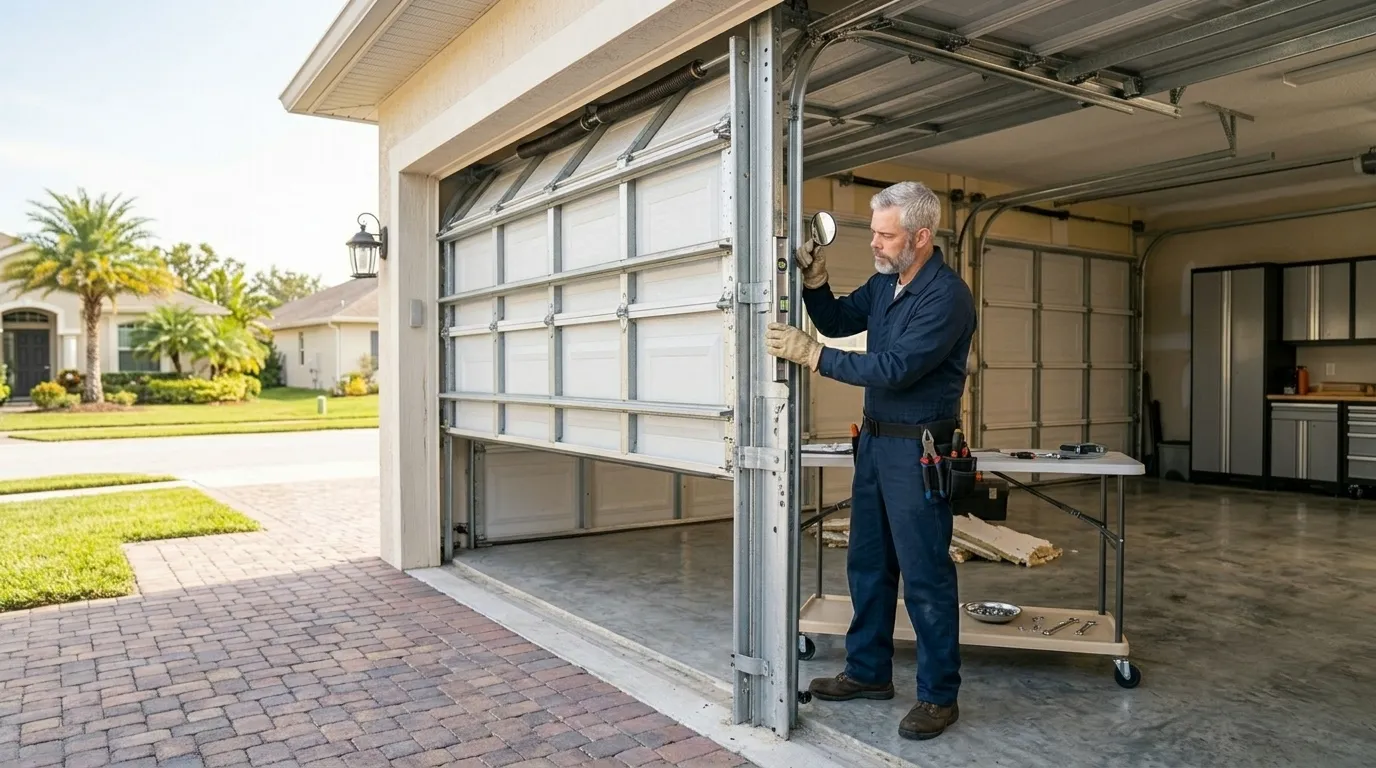
Most calls we get in this area come down to one of three things: a broken torsion spring, an opener that's stopped talking to the wall switch, or a track that's pulled out of alignment. The fix starts with figuring out which one actually failed, because a door that won't open can look the same whether the problem is a $30 part or a full spring replacement.
We check the springs first since that's the most common failure on the housing stock around here, a mix of homes built anywhere from 1938 up through 2015, with a lot of it dating to the 1980s and 90s. Torsion springs on doors from that era are rated for a set number of cycles, and once a house passes 30-plus years old, that spring is usually past due whether it's ever failed before or not.
After the spring, we look at the opener's drive system and the track alignment. Chain-drive openers installed in the 80s and 90s are still common in this area, and the gears inside them wear out long before the motor does. If the fix is a worn drive gear instead of the motor itself, we say so - replacing the whole opener when a gear kit does the job isn't a repair, it's an upsell.
Lake Forest sits in a mild temperate climate band, so we don't get the freeze-thaw cycles that snap springs in colder states. That's the good news. The less obvious issue is what decades of steady, moderate temperatures do to hardware that was never swapped out: springs and rollers here often run their full mechanical lifespan on cycle count alone, without a hard winter ever forcing an early failure that would have flagged the problem sooner.
Across the 24 named areas that make up this housing stock, most of it landed in the 1980s and 90s build wave, with the broader range running from 1938 to 2015. That means a large share of doors in Lake Forest, Foothill Ranch, and Portola Springs are working on original or first-replacement torsion hardware installed 25 to 40 years ago. Nobody notices a spring aging out - until the day it lets go, usually while the door is halfway up.
The mild climate also means galvanized cable and springs don't get the visible rust warning that owners in wetter regions rely on to know it's time. Around here, the failure is often the first sign.
The classic sign is a loud bang from the garage, followed by a door that won't budge or that slams down hard when you try to close it. That's a torsion spring letting go, and on the 1980s-90s stock common through this area, it's usually the original spring or its first replacement finally reaching the end of its cycle count.
A quieter version shows up as an opener that runs but the door barely moves, or moves and reverses partway. That's often a worn gear inside a chain-drive opener from that same build era, not a dead motor - the unit still hums, it just can't finish the pull.
Track misalignment shows up differently: the door judders, rollers grind, or one side lifts faster than the other. On homes with attached garages built into the original slab, minor settling over 30-plus years can nudge a track out of true even when nothing else has changed.
Some of this is safe to check yourself. If the door won't open, look first at the opener's sensor lights near the floor - a knocked or dirty sensor is a common, harmless cause and takes two minutes to clear. Tightening loose track bolts and lubricating hinges and rollers with garage door lubricant (not household oil) is also fine for an owner to do.
What you shouldn't touch is the torsion spring itself. It's under enough tension to cause serious injury, and on the double-door setups common in this area's larger homes, that tension is higher still. If your door has a broken spring, a bent track, or an opener that runs but won't lift the door, that's a job for someone with the right bars and clamps, not a Saturday project. We'll always tell you straight when a repair makes sense versus when the hardware's old enough that replacement is the better spend.
There's no fixed age, since it's cycle count that matters, not calendar years. But a lot of homes here were built in the 1980s and 90s, so if your spring hasn't been replaced since the house was built, it's likely well past its rated cycles and worth having checked before it fails on its own.
In this mild climate, hardware doesn't usually show rust or cold-weather stress the way it does elsewhere, so there's rarely a visible warning sign. The spring just reaches the end of its cycle count and lets go, often on a door that seemed to be working fine the day before.
Depends on what's actually broken. If it's a worn drive gear, a repair is usually the better spend. If the motor itself has failed on a unit from the 1980s or 90s, parts can be hard to source, and replacement often makes more sense. We'll check the specific unit before recommending either.
Call now or request a free quote - same-day service on most repairs, upfront written pricing.