Lake Forest, CA · Garage Door Service
Serving Trabuco Canyon's 452 households from our Lake Forest yard, five miles out. Doors here date mostly to 1984 - springs, rollers, and openers of that era.
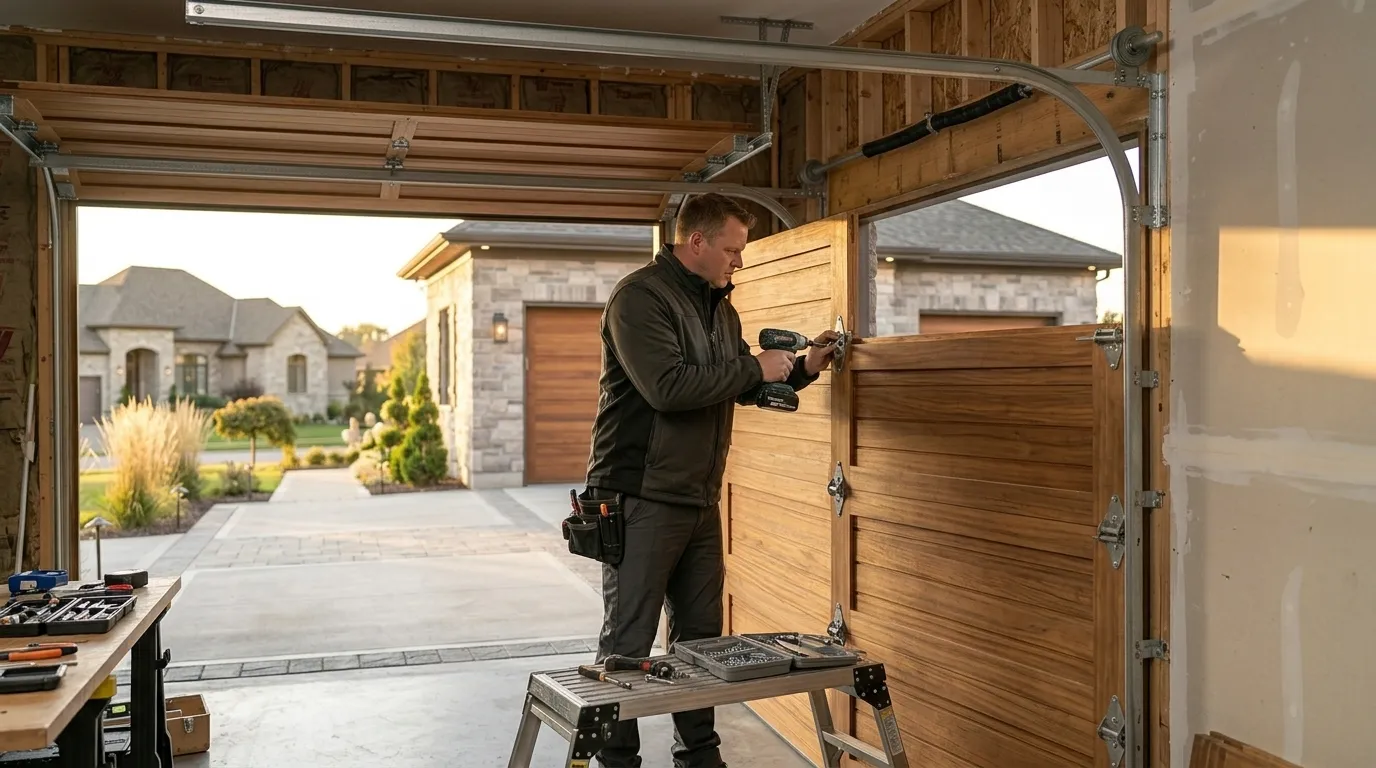
Trabuco Canyon's houses run a median build year of 1984, and that number matters more than most of what's on a service menu. A door installed around then has had close to forty years of cycles on its original torsion spring or, on older extension setups, a spring that's already outlived its rated life more than once. The calls we get from this pocket track that: broken torsion springs on double doors, rollers worn oval instead of round, and openers original to the house finally giving out on the drive gear or the circuit board. We also see cable fray on doors that never got a spring replacement when they should have - the cable does extra work it wasn't built for and eventually lets go. None of this is exotic. It's just what forty-year-old hardware does when nobody's touched it. One thing we won't do is talk you into a full replacement when a spring and a roller set will get another decade out of the door. If the track's straight and the panels aren't rusted through, fixing beats replacing.
We run out of Lake Forest, about five miles from Trabuco Canyon, and that's a short enough drive that most jobs here don't turn into a scheduling puzzle. We don't keep a crew stationed in Trabuco Canyon itself - there's no local yard, just the trip out - so what we can tell you is the distance, not a guaranteed arrival window, because that depends on what else is on the truck that day. What we can say is that five miles is close by any measure, and it's rarely the reason a job gets pushed. If a repair needs a part we don't carry standard - an odd-length torsion spring or a discontinued opener board, for instance - that's a second trip, and we'll tell you that up front rather than promise a same-visit fix we can't back up.
A 1984 build date points toward a fairly specific set of doors: steel sectional panels, torsion springs mounted on a shaft above the header in most cases, and roller tracks bolted to framing that hasn't been touched since the house went up. Openers from that stretch, if they're still original, are chain-drive units well past any reasonable service life - the kind where the logic board fails before the motor does. What we don't see much of here are the newer insulated composite doors or belt-drive openers that show up on houses built in the last fifteen years, simply because so little of the stock is that new. That consistency helps on the parts side: torsion springs and standard rollers sized for 1980s door heights are easy to match on the truck. It's the oddball extension-spring setups on a handful of older garages, or a non-standard opener rail, that turn into a return trip rather than a same-day fix.
Trabuco Canyon is a small slice of the wider service area - 452 households, against 223,302 across the whole territory we cover out of Lake Forest. Median household income here runs $221,458, well above the area-wide figure of $131,314, and that shows up less in the doors themselves than in how they're kept: fewer sagging panels held together with a bungee cord, more owners who call at the first grinding noise instead of waiting for the spring to snap. The area sits inside a mild temperate climate band, so we're not fighting the freeze-thaw cycles that crack door bottoms in colder states - wear here comes from age and cycle count, not weather. With household build years centered on the low 1980s, most of what's on the ground is steel sectional doors on torsion hardware old enough to be near, at, or past its rated spring life.
No. We're based in Lake Forest, about five miles out, and drive to Trabuco Canyon for calls. There's no local depot, so any part we don't carry on the truck means a return trip rather than a same-visit fix.
Median build year in Trabuco Canyon is 1984, and torsion springs are rated for a set number of cycles, not years. A door that old has usually used up its original spring's life span already, whether it's been serviced or not.
If it's original to a house built in the early-to-mid 1980s, the logic board is the most likely failure point, and boards for units that old are often discontinued. At that point replacing the opener usually costs less than chasing a part that's hard to find.
Not the way cold-climate freeze-thaw does. This is a mild temperate band, so the wear we see is mostly age and use - worn rollers, tired springs, cables that have done a few too many cycles - not weather damage.
Call now or request a free quote - same-day service on most repairs, upfront written pricing.