Lake Forest, CA · Garage Door Service
Most Trabuco Canyon garage doors date to the mid-1980s and still run on steel rollers. Here's what wears out first and what a roller swap actually involves.
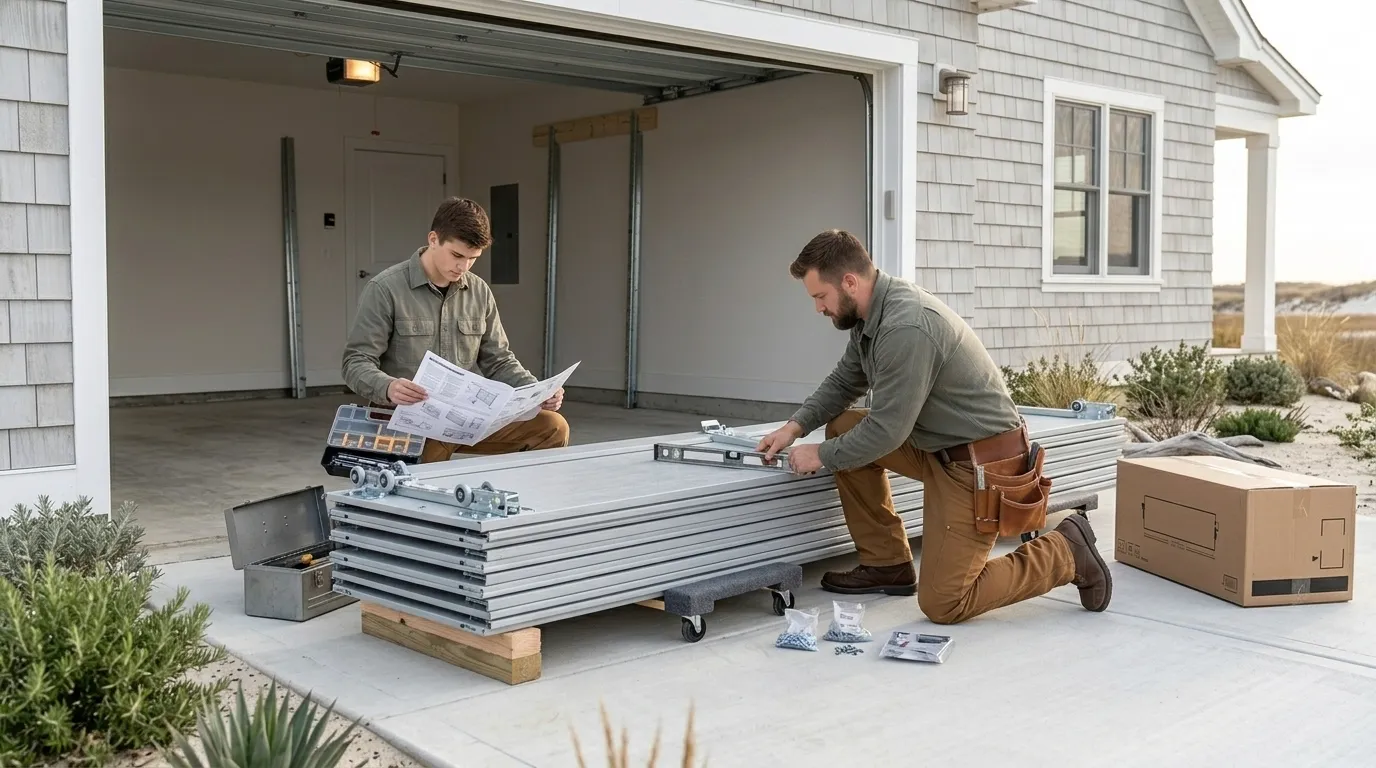
A house in Trabuco Canyon built around 1984 almost always came with a steel sectional door on steel rollers riding in a raw steel track, no plastic sleeve, no bearing. That's what the builders spec'd across this stretch of Orange County in that era, and thirty-plus years later a lot of those original rollers are still in the door, just worn thin. The first sign isn't usually a stuck door - it's noise. A grinding or rattling sound on the way up, worse on the top two panels where the roller carries the most weight through the curve into horizontal track. Some owners notice the door catching for a half-second at that same spot every time, then jerking through. That hesitation is metal-on-metal contact where the roller stem has worn oval instead of round, and it only gets worse from here, not better on its own.
A full roller set - typically 10 rollers on a standard double, fewer on a single - is a straightforward swap once the truck is on site, but the drive out from Lake Forest is part of the math here. Trabuco Canyon sits about 5 miles out, so factor that into when you call versus when the job starts, not into how long the roller work itself takes once we're there. The actual replacement is quick because the door only needs to come off track on one side at a time, not disassembled.
On a door this age, the roller is rarely the only thing wearing. The track itself may have grooved or rusted slightly at the same contact points, especially if the household never lubricated it - which is common, because a steel roller in this mild coastal-inland climate doesn't seize the way it would somewhere with real freeze-thaw cycles, so people forget it needs any attention at all. That's the trap: the door still moves, so nothing gets fixed, until a roller stem finally snaps and the panel drops on one side. Hinges at the roller brackets on a 1984-built door are also original steel, usually the same gauge as the roller stem, so if one's worn the other usually isn't far behind.
Swapping a single roller on the bottom panel, with the door down and the spring tension already relaxed, is within reach for someone comfortable with hand tools. Swapping a roller in the top section, above head height, with the door up and the spring still loaded, is not - that's where fingers and torsion springs meet, and it's not a place to learn on the job. If your door is original to a mid-1980s build here, we'd also check the track alignment while it's open, since bent track from decades of roller wear is common and a new roller in a bent track wears out again fast.
We pull the door off track one side at a time, work each roller out of its bracket, and set new ones in - nylon-stem rollers with sealed bearings instead of the bare steel originals, which is the standard upgrade now and runs quieter without needing grease. Nylon rollers also hold up fine in this mild climate; there's no cold-weather stiffening to worry about the way there might be somewhere with real winters, so it's a straightforward material swap, not a compromise. While the door's open we check the track for the grooving or bends that steel rollers tend to leave behind after this many years, and true it up if needed so the new rollers don't just wear the same path again.
Trabuco Canyon's housing here runs mostly from the early-to-mid 1980s build wave that shaped this side of the service area, and that means a specific hardware generation: steel rollers, steel track, original torsion hinges, all matched to doors that are now 40 years old. That's a different failure point than you'd get in a newer Foothill Ranch or Portola Springs build with factory nylon rollers already in place. It's also a smaller job market than the larger cities nearby - with roughly 452 households in this immediate area, roller wear shows up steadily but not in the volume that would justify a branch out here, which is why the call routes from Lake Forest rather than a local shop. One honest limit: if the track itself is badly bent or rusted through, a roller swap alone won't quiet the door - at that point the track needs replacing too, and we'll say so rather than sell a roller job that won't hold.
That's almost always the roller hitting worn or slightly bent horizontal track right where it curves from vertical to horizontal - a common wear point on doors from the early-to-mid 1980s build era common in this area, where the original steel roller has worn oval over decades of use.
Not always. If the track is straight and just has light surface wear, new nylon rollers alone will run quiet again. If the track has visible grooving or bends from years of steel-roller contact, replacing rollers without addressing the track means the new ones wear the same path fast.
We work out of Lake Forest, about 5 miles from Trabuco Canyon. That distance factors into scheduling the visit, not into how long the roller replacement itself takes once we're on site.
On a door built in the 1980s, original steel rollers on bare steel track have usually put in decades of service already. Once they start grinding or catching, they're near the end of their life - most owners replace the full set with sealed nylon rollers rather than patch one at a time.
Call now or request a free quote - same-day service on most repairs, upfront written pricing.