Lake Forest, CA · Garage Door Service
Garage door repair and service for Trabuco Canyon homes built mostly in the 1980s, covered by Lake Forest Garage Door Pros from five miles up the road.
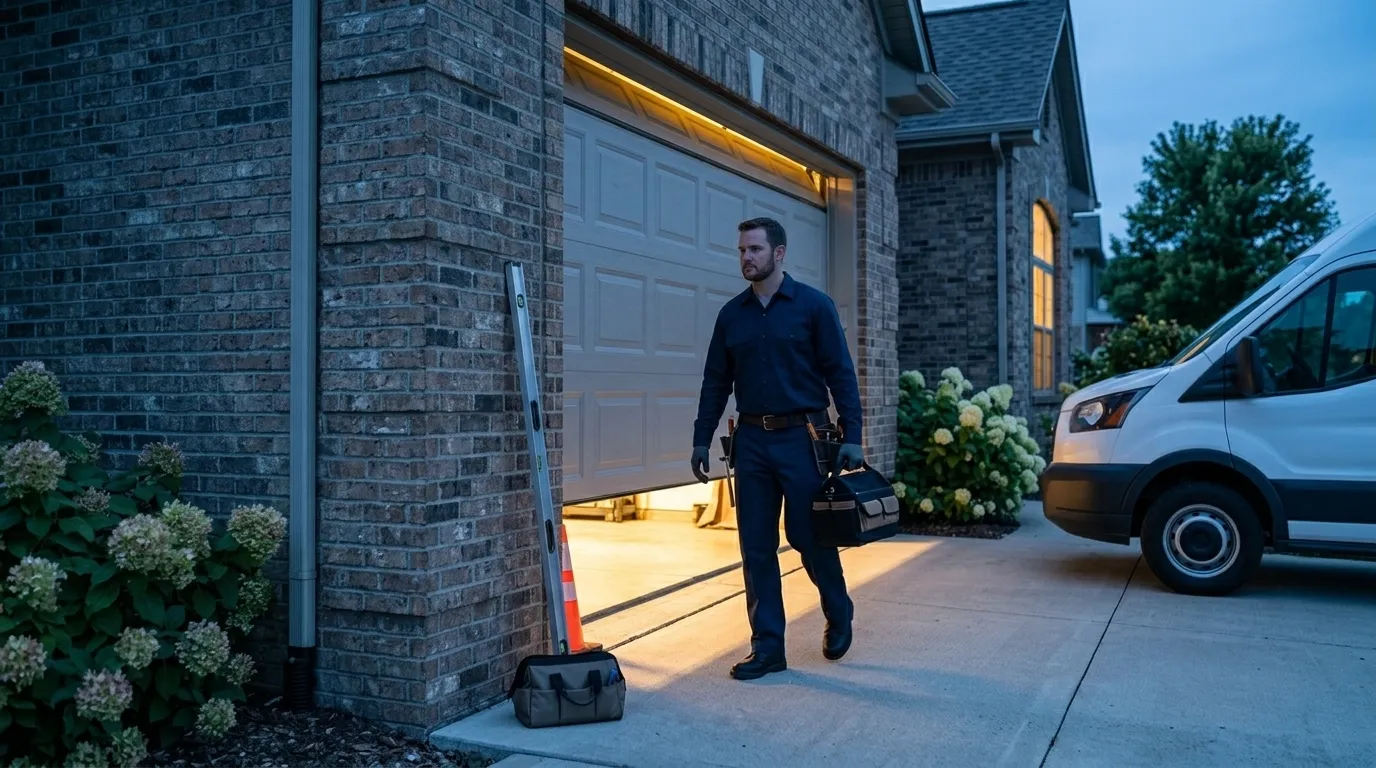
Trabuco Canyon sits about five miles from our Lake Forest shop, which changes how a service call here actually runs. It's close enough that we don't pad an estimate for drive time, but it's far enough that we load the truck differently before we leave, because a callback for a missing part costs more time on this stretch than it would on a job around the corner. Most of what we see once we get there traces back to the same source: houses in this pocket went up around 1984, which puts the openers, springs, and track hardware at roughly forty years old if nothing's been swapped since. That's not unusual for the wider area, where homes range from 1938 to as recent as 2015, but a 1984-built garage tends to still have its original torsion spring and a chain-drive opener that's outlived its motor twice over. The complaint is rarely dramatic. It's a door that groans on the way up, a remote that works from the driveway but not from the street, or a spring that finally lets go on a cold morning after decades of quiet fatigue.
A straightforward call here - spring swap, opener replacement, a cable job - runs about like it would anywhere else in our service area once the truck is on site. The travel adds time on our end, not on the homeowner's driveway. Where this pocket differs is in what's behind the door. With a median household income well above the area's $131,314 average, we run into more upgraded doors than a standard steel slab: insulated panels, wood-look composite, heavier hardware built to carry the extra weight. Heavier doors ask more of a torsion spring and more of the opener's drive gear, so the parts wear differently than they would on a lightweight builder-grade door from the same era. That doesn't slow down a diagnosis. It does change what we quote, because a heavier door sometimes needs a higher-cycle spring and a stronger opener than the one that's failing. We'd rather tell you that up front than swap in an underrated part that fails again in a year.
The mild temperate climate through this area is kind to garage doors in one sense - no ice-locked tracks, no frozen rollers seizing a motor. But mild doesn't mean static. Forty years of daily temperature swings dry out factory lubricant on 1980s hardware just as surely as a harder climate would, and a torsion spring that's never been serviced tends to fail without warning rather than with a slow squeal. On doors from this build era, we also see galvanized cable starting to fray where it wraps the drum, and the older extension-spring setups some of these garages still carry, which are noisier and less forgiving to service than a torsion system. On the heavier upgraded doors common in this income bracket, we sometimes find an opener that was never rated for the door's actual weight, which shows up as a motor that runs hot and a chain that stretches faster than it should. None of that is exotic. It's just what forty-year-old hardware under a heavier-than-average panel does when nobody's looked at it in a while.
Replacing a remote battery, tightening a loose bracket, clearing a track of debris - fine, and worth doing yourself before you call anyone. A torsion spring is not on that list. It's under enough tension to break bones, and on the heavier insulated doors common in this area, the spring is often rated higher than a standard hardware-store replacement, which means the wrong part can fail again fast, or fail badly. We also won't pretend every trip out here is worth the drive for a five-minute fix. If your opener is just unplugged, or the sensor eyes are knocked out of alignment, that's a five-minute check you can do standing in your own garage before you pay anyone's travel time. Where we'd tell you to stop and call: anything involving the spring, the cable, or an opener that's making a grinding sound under load. That's where a DIY fix on a forty-year-old system turns a $200 repair into a $600 one.
For a spring job on a house from this era, we're usually replacing a torsion spring that was never sized for the door currently hanging on it, especially if the door's been upgraded since 1984 and the spring hasn't. That means a measurement of the door's actual weight before we quote a spring, not a guess based on the build year alone. For an opener swap, we check whether the existing rail and mounting will take a heavier-duty unit, since retrofitting a stronger motor onto old brackets sometimes means new hardware there too. Parts for older extension-spring systems can take longer to source than standard torsion parts - that's a real limitation, and if your garage still runs one, expect a wait we'll tell you about before we start, not after. Everything else - cable, rollers, track alignment - is a same-visit fix once we're on site, since it's standard stock we carry regardless of which pocket of the service area we're headed to that day.
A national warranty page or a generic maintenance checklist doesn't know that Trabuco Canyon is a 452-household pocket five miles off our regular route, with houses that average a decade or so older in build than some of the newer tracts nearby, and household incomes that push people toward heavier, custom doors rather than the standard slab. Those three things together are why the same fault - a dead spring, a tired opener - shows up differently here than it would on a newer, lighter door closer to the shop. A pocket this size doesn't generate enough daily call volume on its own to justify a dedicated stock list, so the parts on the truck when we head out here are a judgment call based on what a 1984-era, heavier-door home usually needs, not a fixed van inventory. That's the honest shape of the tradeoff: we're not around the corner, but we know what era of hardware we're driving toward before we leave.
It's about five miles from our Lake Forest location. We don't charge extra for the drive itself, but because it's far enough that a second trip for a missing part costs real time, we load the truck based on what a house from this area's build era typically needs before we head out.
Homes in this area often carry heavier, upgraded doors - insulated steel, wood composite - that weren't standard when the house was built around 1984. If the opener was never upgraded to match, it runs hot and the chain stretches faster than normal. That's a common mismatch we check for on a service call here.
A torsion spring from a house built around 1984 has likely outlived its rated cycle count, even without a visible failure. Springs tend to go without much warning. If yours hasn't been replaced since the house was built, we'd rather look at it before it breaks than after.
Not always on the truck. Extension-spring systems are less common now than torsion, and some parts for older setups take longer to source. If your garage still runs one, we'll tell you about the wait up front rather than start the job and stall partway through.
Call now or request a free quote - same-day service on most repairs, upfront written pricing.