Lake Forest, CA · Garage Door Service
Off-track garage door repair for Temescal Valley homes, most built in the early 2000s. Lake Forest Garage Door Pros drives the 14 miles out to fix the track, not just push the door back.
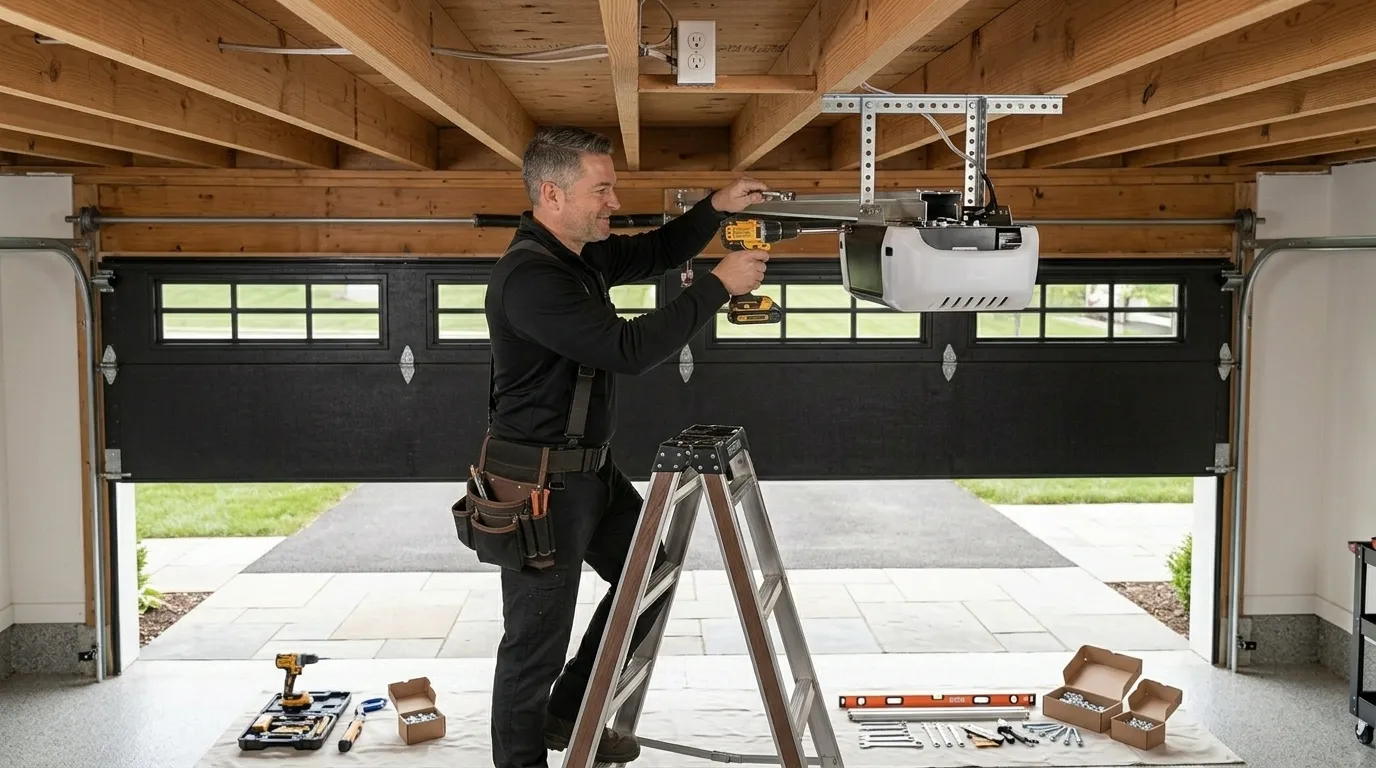
Temescal Valley homes run newer than a lot of what we see closer to Lake Forest - most of this stock went up around 2003, which means galvanized steel track, factory-set roller brackets, and openers wired for photo-eye safety sensors rather than the older mechanical reversal setups. When a door comes off track here, it's rarely a rust or age problem the way it can be on 1980s hardware. It's almost always one bent track section, a roller that jumped the rail, or a bracket that's worked loose from vibration.
The fix starts with finding where the door actually left the rail, not just where it's stuck. We check both vertical tracks for bends, check the horizontal-to-vertical curve where most impact damage shows up, and check that the cables are still seated in the drum before we touch anything else. On a door this age, the track is usually straightenable or swappable in one piece - we're not fighting decades of corrosion or a track profile nobody makes anymore.
We're driving the 14 miles out from Lake Forest for this call, so we bring the truck stocked for what late-model track and roller hardware actually needs, not a guess.
The most common cause we see on newer construction like this is impact - a car bumper, a bike, a stored ladder that clips the track and knocks a bracket loose. Because the mild coastal-inland climate here doesn't put much stress on the metal itself (no hard freeze-thaw, no heavy rust load), the track failures we find tend to be mechanical, not environmental.
The other frequent cause is a broken cable or a snapped extension spring that lets one side of the door drop faster than the other, which yanks the rollers sideways off the rail. If that's what happened, the track itself is often fine - the real repair is the spring or cable, and the off-track symptom is downstream of that.
Worst case on a door this age: the bottom bracket has torn loose from the panel, which usually happens under spring tension when nobody noticed the door was already fighting itself before it jumped the rail. That one needs the door taken down before anything gets reset, not forced back into the track under load.
Median household income in Temescal Valley runs about $119,647 - noticeably higher than the wider Lake Forest Garage Door Pros service area average of $131,314 is not, actually; it sits below it, which matters for where the repair-or-replace line falls. At this income level, a straightforward track realignment or a bracket reset is almost always worth doing rather than replacing the door. Full door replacement only makes sense here if the panel itself is torn or the opener and track are both original and failing together.
We don't quote a price without seeing the door - a bent track section and a torn bracket are two different jobs with two different parts lists. What we can tell you is that on 2003-era hardware, we're rarely looking at custom or discontinued parts, which keeps the job closer to a repair than a replacement in most cases.
For this era of construction we carry standard 2-inch and 3-inch radius steel track sections, factory-spec roller brackets, and both nylon and steel rollers sized for the sectional doors common in builds from this period. We also stock the cable and pulley hardware that tends to go along with an off-track call, since a snapped cable is often what put the door off the rail in the first place.
What we don't stock on the truck: specialty low-headroom track kits or anything custom-fabricated for a nonstandard door opening. If a Temescal Valley door needs one of those, we order it and come back - we won't tell you it's fixed with a part that doesn't actually fit the opening.
A track realignment with no broken hardware is usually the fastest call we run - bend the section back, reset the rollers, check travel. Add a broken cable or a torn bracket and the job runs longer, because the door has to come down safely before anything gets straightened or replaced.
We're coming from Lake Forest, 14 miles out, so the drive is part of the math on any given day, not the repair itself. Once we're on site, the work on a door this age moves fast precisely because the hardware is standard and in stock on the truck.
Do not try to push a door back onto the track yourself while it's still under spring tension - that's the one that puts people in the ER, not the garage. If the door is off track and the springs are intact, the door can drop without warning the moment a roller catches wrong.
What you can safely check before calling: whether the track bolts are visibly loose at the wall bracket, and whether there's an obvious bend you can see without touching the door. That tells us what to bring. Beyond that, a door on late-model hardware isn't worth risking a DIY reset to save a service call - the parts are inexpensive and in stock; a trip to urgent care isn't.
On homes built around 2003, it's almost always impact damage to the track or a broken cable/spring letting one side of the door drop, not age or rust - the climate here is mild enough that corrosion rarely drives this failure the way it does on older coastal hardware.
For most Temescal Valley homes, a track realignment or bracket reset costs far less than replacement, and at the area's income level it's almost always the right call unless the panel itself is torn or the opener and track are both failing together.
We're driving 14 miles out for every call here, so the trip is part of scheduling, not a same-minute response. We don't quote a response time we can't back up - call and we'll tell you the real window for the day.
Not if the springs are still under tension - a roller can catch and drop the door without warning. Check for loose track bolts or a visible bend before you call, but leave the reset itself to someone working with the door de-tensioned.
Call now or request a free quote - same-day service on most repairs, upfront written pricing.