Lake Forest, CA · Garage Door Service
Garage door repair for San Clemente homes, covered from Lake Forest Garage Door Pros. Local build-year, income, and distance numbers that shape the job, not a generic service page.
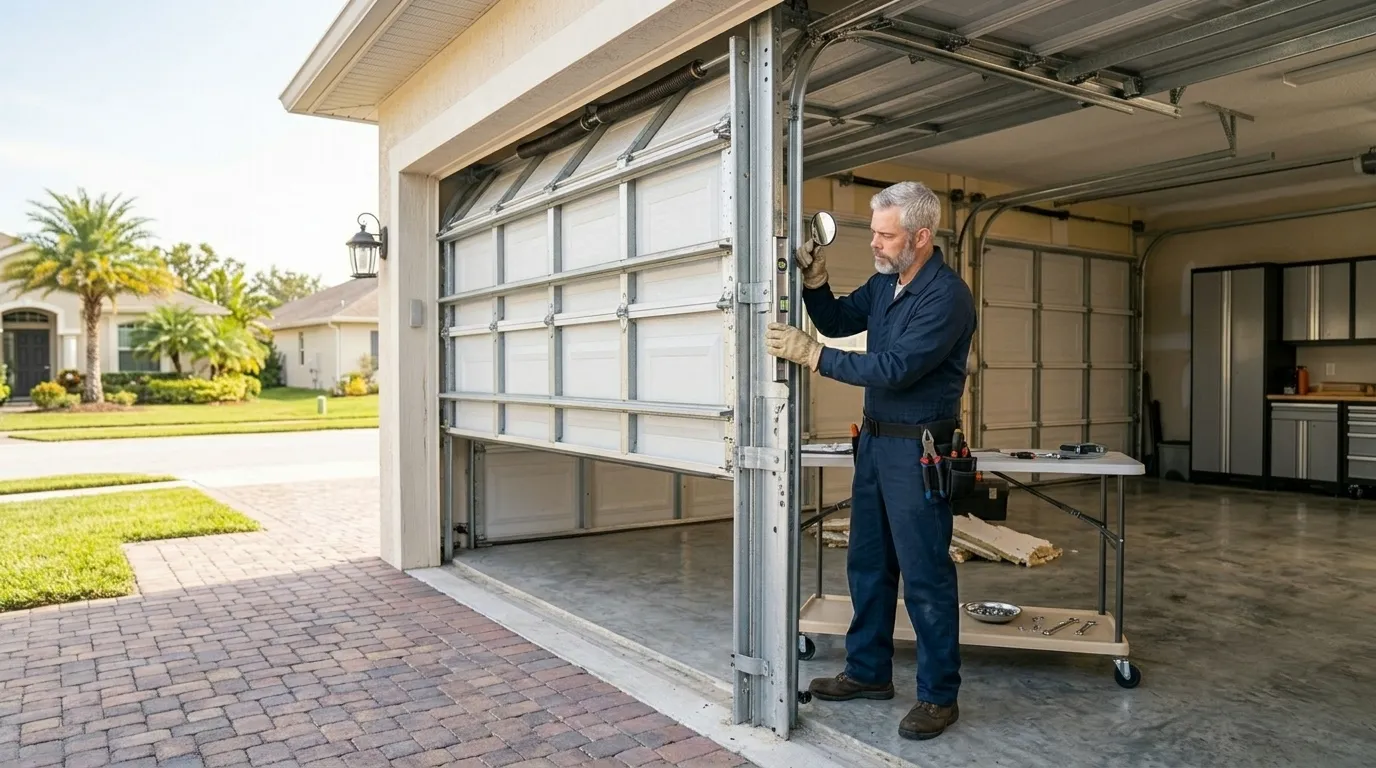
San Clemente's housing stock lines up with the same 1982 median build year you'll find across the rest of the area Lake Forest Garage Door Pros covers, so the hardware problems aren't unique to this town - they're just concentrated here because so many houses went up in that same window. What does change is the money and the distance. San Clemente sits about 15 miles from our shop in Lake Forest, farther out than towns like Laguna Woods (4 mi) or Foothill Ranch (2 mi), and the median household income here runs $134,735, a notch above the $131,314 median across the wider service area. A repair on a 1982-era door usually means a torsion spring sized for an older, heavier wood or early steel panel, worn rollers on original track, or a center support bracket that's never been touched. We check the spring wind and the track alignment before we touch a panel, because on a door this age, the fix is rarely just the part that broke first.
We run out of Lake Forest, not San Clemente, so every visit here is a scheduled drive, not a walk from a local branch - we don't have one in town and we won't pretend otherwise. When you call, tell us the door's approximate age if you know it (most in San Clemente track close to that 1982 median) and what it's doing: won't open, opens crooked, makes a bang. That gets the right parts on the truck before we leave Lake Forest instead of after we arrive. You can see the full rundown of what we do in San Clemente at /san-clemente-garage-doors/, and if you're closer to our home base, the general repair page for /garage-door-repair-lake-forest-ca covers that side of the work. We don't quote a same-day window for every San Clemente call - the 15-mile drive means some days we can slot you in and some days you're on the next run out.
On a door built around 1982, the failure usually starts small and gets loud. A torsion spring that's cycled for four decades doesn't always snap clean - it can just go slack, and the door starts feeling heavier by hand or the opener starts straining on lift, drawing more current than it should. Rollers original to that era are often steel-on-steel with no nylon sleeve, so you'll hear a grinding rattle before you see any visible damage to the track. Cables fraying at the bottom bracket show up as a door that drops unevenly, one side lower than the other, right before one side lets go entirely. None of this is exotic - it's the ordinary end-of-life pattern for hardware installed when San Clemente's housing was mostly going up, and it's the same pattern across the areas that share that 1982 median. The tell is usually in the sound before it's in the stall.
The reason this matters for San Clemente specifically is the concentration, not the climate. With a median build year of 1982 and a household count around 24,093, a large share of the doors in town are original or close to it - nobody's replaced the spring or the opener because the door still opens, technically. That's different from a mixed-age town where half the housing is newer stock with updated torsion systems and safety cables. Here, when a spring goes, it's very often the original one, sized to a door and counterweight setup from the early '80s, and matching that correctly on a replacement matters more than it would on a newer install. We won't swap in a generic universal spring and call it done - the wind and the drum size have to match what the door actually weighs, and on an original door that's not always obvious without measuring.
We carry the torsion springs, extension cables, and steel rollers that cover most of what fails on a door from San Clemente's build era - the 1982-median stock this town is mostly made of. Standard track sections, center brackets, and bottom brackets ride on the truck too, since those wear out at the same rate as the spring on a door this age. What we don't stock is every obsolete panel style - if a door needs a specific discontinued panel to match an original 1980s design, that part can take longer to source than the repair itself, and sometimes replacing the section (or the whole door) makes more sense than waiting on it. We'll tell you straight if that's the case rather than order a part that sits for weeks.
No. We run out of Lake Forest and drive to San Clemente for every job, about 15 miles each way. We don't keep a branch or a depot in town, so scheduling depends on the day's route rather than a local same-day guarantee.
Most San Clemente homes sit near the area's 1982 median build year, and original torsion springs from that era have usually cycled well past their rated life. Once one side goes slack, the other side takes uneven load and fails faster, which is why replacement in pairs is usually the right call.
If the track, rollers, and opener are all original alongside the spring, patching one part often just shifts the next failure a few months out. On doors from San Clemente's build era we'll flag when the parts add up to more than a new door would cost.
Call now or request a free quote - same-day service on most repairs, upfront written pricing.