Lake Forest, CA · Garage Door Service
North Tustin homes date to the mid-1960s, older than most of the service area. See what that means for a new garage door install, from sizing to hardware.
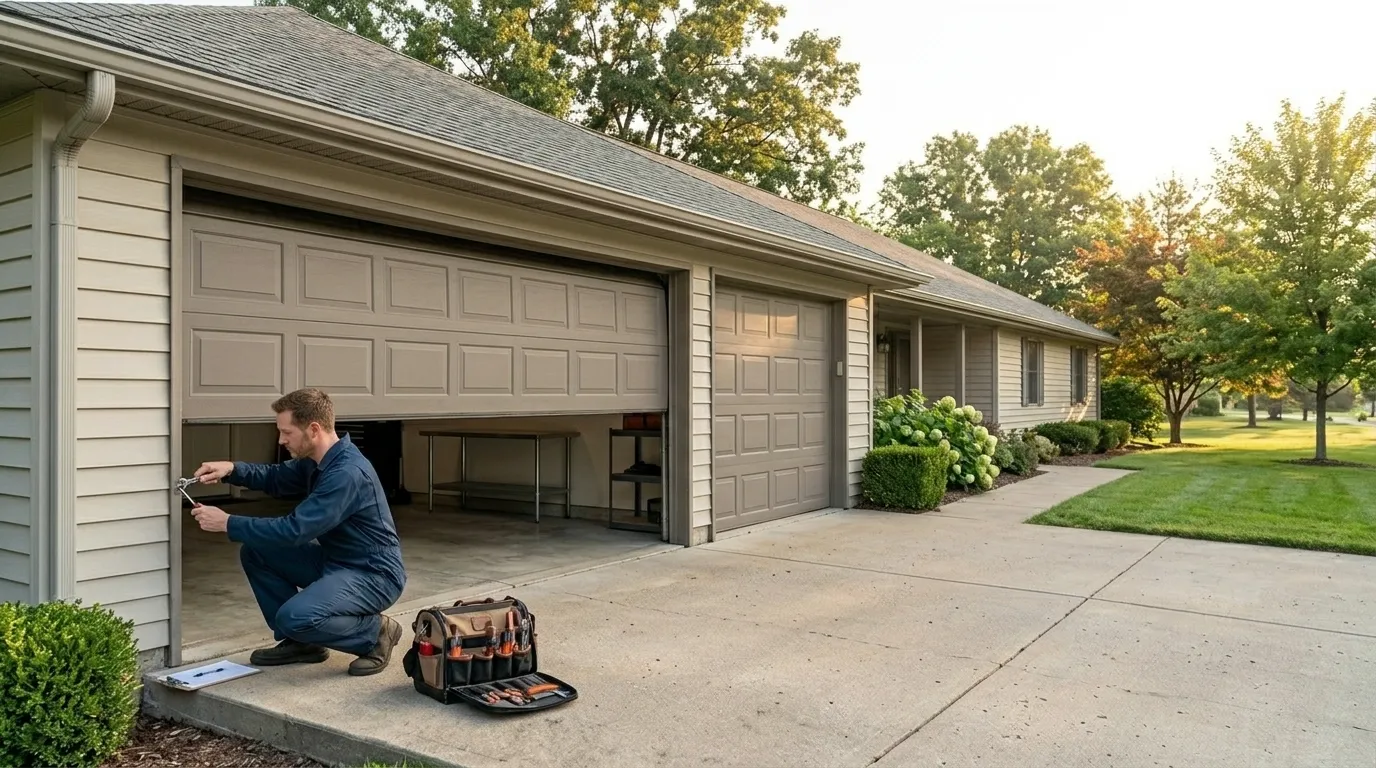
The call we get from North Tustin is different from the one we get closer to Lake Forest. Most of this area was built around 1965, well ahead of the 1982 median for the wider service area we cover. That gap matters the moment you go to replace a door instead of patch it.
Houses from the mid-1960s were often framed for door openings that don't match today's standard sizes. A single 8-foot-wide bay isn't unusual, and the header height can run a few inches short of what a modern insulated door and its track expect. Track and roller from that era were also set up for lighter wood-panel doors, not the heavier steel or insulated sections most owners want now. Drop in a new door without checking the opening first and you find out mid-install that the jamb needs shimming, the header needs reinforcing, or the track brackets don't line up with modern hardware.
We also see openers added later, bolted onto framing that was never sized for the load a heavier door puts on a header. None of this is unusual for the area - it's just not what you'd deal with in a house built in the 1990s, and it's why we look at the opening itself before we quote a door.
For a North Tustin install, the first step is measuring the actual rough opening against the door and track you're buying, not assuming it matches a catalog size. If the opening is undersized or the header's thin, we build out the jamb or add blocking before the door ever goes in. That's carpentry work, not just door-hanging, and it takes longer than a straight swap.
Once the opening's square and solid, we set new track sized for the door's weight, not the weight of whatever wood-panel door came out. If the house still has the original torsion or extension spring hardware from the 1960s, that gets replaced outright - we don't reuse springs rated for a lighter door under a heavier one. New rollers, new cable, new bottom brackets go on as a set, not piecemeal.
We don't try to save the old hardware just because it still turns. Hardware built for a 60-year-old wood door isn't rated for a modern insulated steel section, and running it that way is how a cable snaps or a spring lets go under load. If a homeowner wants to keep original hardware for looks, we'll say plainly when that's not a safe option rather than force it.
A straightforward swap - same size opening, hardware already up to spec - runs like any other install. Add framing work for an undersized or off-height opening from the 1965-era stock common here, and the job runs longer, since we're doing carpentry before the door work starts.
The mild climate this area sits in doesn't add weather delays to the schedule the way freeze-thaw regions deal with, so once the opening's ready, the door itself goes up without extra prep for insulation against cold. That's one advantage of installing here versus a lot of the country - we're not fighting the weather, we're fighting the opening.
We travel out from Lake Forest for jobs here, about 10 miles by the route we use, so we schedule North Tustin installs as a set appointment rather than a drop-in, same as we do for the rest of the towns we reach from the shop.
A door that looks fine sized off a national chart can fail here specifically because the opening underneath it isn't standard. We've had doors ordered to a stock width that came up short against a 1965-era header, forcing a return trip and a rebuild of the jamb that should've happened first.
The other local number worth knowing: median household income in this area runs well above the $131,314 median across the wider service area, and North Tustin owners more often ask for higher-end insulated doors and quieter openers rather than the base-model swap. That's a reasonable ask, but it doesn't change what the framing needs - a nicer door on an unreinforced 1965 header still fails the same way a cheap one would.
One limitation worth saying outright: if the opening needs significant structural work - a header replacement, not just blocking - that's beyond a standard install appointment and we'll tell you before we start, not after we've torn into the frame.
Sometimes, but not always. A lot of the housing here dates to around 1965, and openings from that era don't always match today's standard door widths and header heights. We measure the actual opening before quoting, since a stock-size door can come up short against an older frame.
We replace it. Hardware sized for a lighter wood-panel door from the 1960s isn't rated to carry a heavier modern steel or insulated door safely. New rollers, cable, and springs go in as a set sized to the new door's weight.
About 10 miles from our shop in Lake Forest. We don't keep a branch or crew stationed in North Tustin, so installs here are scheduled appointments rather than same-day drop-ins.
It keeps the schedule simpler. The area sits in a mild temperate climate band, so we're not building in extra time for cold-weather sealing or freeze-related delays the way installers in harsher climates do.
Call now or request a free quote - same-day service on most repairs, upfront written pricing.